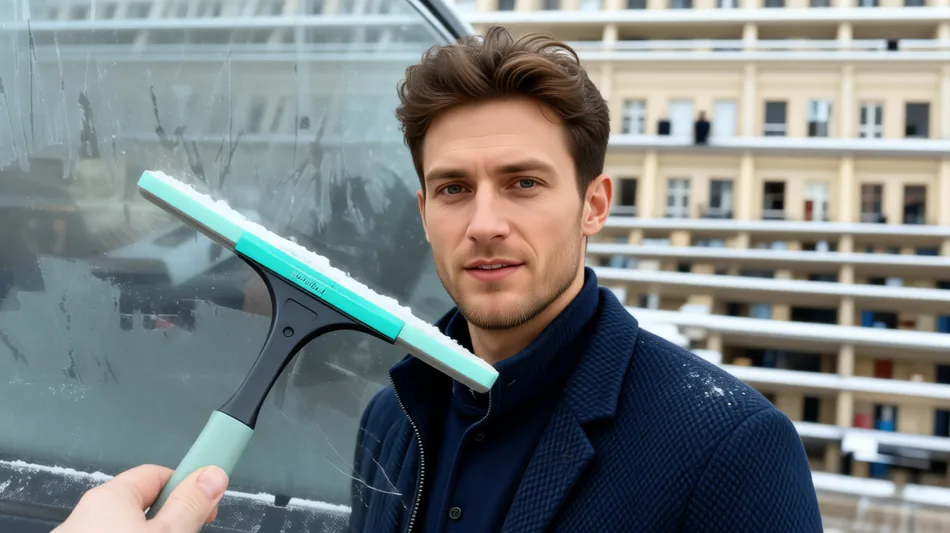
Former NASA Engineer Mark Rober Reveals Science-Backed Method to Clear Car Windscreens
Former NASA engineer Mark Rober has shared a science-backed method for rapidly clearing frost and condensation from car windscreens. By combining full heat with air conditioning and fresh air exchange, drivers can bypass the slow process of waiting for heaters to work or resorting to ineffective manual scraping.
Former NASA engineer Mark Rober has applied his background in space technology to demonstrate a practical method for rapidly clearing ice and condensation from car windscreens. With the Met Office forecasting continued drops in temperature, motorists are facing delays while waiting for vehicle heaters to clear windows before driving.
In a video posted to his YouTube channel, Rober outlined a four-step process that he argues is faster and more effective than traditional scraping or using hot water from a kettle. The technique relies on managing humidity levels within the vehicle cabin rather than simply applying heat.
"Number one, turn your heater on full blast," Rober explained. "This is because, like we said, hot air can hold more moisture." He then advised drivers to activate their air conditioning system. "This pulls moisture out of the air as the air passes over the cold. It's kind of like we're wringing out a towel."
Rober noted that condensation typically forms when there is a significant temperature difference between the humid interior and the cold exterior of the car. While air conditioning is often associated with cooling in summer, he emphasized its role in dehumidifying the air when paired with heating.
To ensure a steady supply of drier air, Rober instructed drivers to deactivate the air recirculation function. "Winter air is cold and we know it doesn't hold much moisture," he said. "So, if you bring it into the car and then heat it up, it has a lot of absorption capacity."
His fourth step involves cracking the windows open slightly. "Now, this might not be possible if it's freezing cold or raining outside but cracking the windows, even if it's just for a few seconds, helps by initially exchanging the humid air in your car with the dry air from outside."
For long-term prevention of condensation, Rober also suggested placing cat litter inside a tied sock and positioning it beneath the windscreen on the interior side of the vehicle to act as a natural dehumidifier.
Rober spent nine years at NASA, including seven years working on the Mars Curiosity Rover project, before leaving to create wearable technology for Halloween costumes. His demonstration highlights how principles used in space exploration can be adapted for everyday automotive maintenance.
M.Marini--GdR