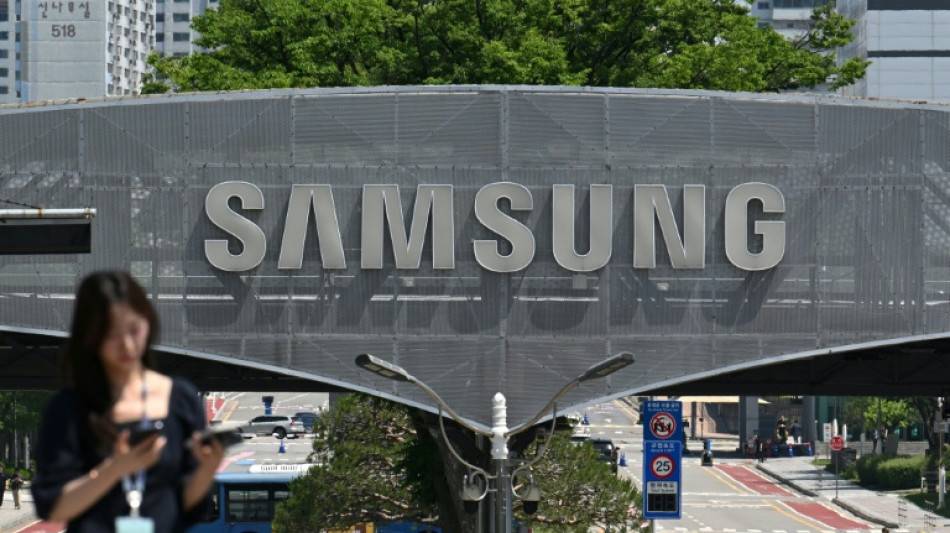
Samsung workers wrap up vote on massive AI bonus deal / Photo: Jung Yeon-je - AFP/File
Samsung Electronics' labour union is expected to announce Wednesday whether chip workers voted to ratify a wage deal that would deliver massive AI-linked bonuses and helped avert a major strike.
The tentative agreement between the South Korean memory chip giant and its largest union federation over a new bonus scheme for employees in the semiconductor division has fuelled tensions among other workers as well as subsidiaries and shareholders.
An electronic vote among about 70,000 unionised employees began Friday and runs until 10:00 am (0100 GMT) on Wednesday, with results expected shortly afterwards.
Local media reported on Tuesday that around 90 percent of union members had already voted. The agreement will be "automatically ratified" if approved by a majority of voters, according to the union's lawyer.
The last-minute deal, reached last week to avert a planned 18-day strike, comes amid a global artificial intelligence boom that has turbocharged Samsung's high-bandwidth memory chip business, crucial for AI data centres.
Under the 10-year deal, which is tied to ambitious performance targets, annual bonuses would amount to 10.5 percent of the chip division's operating profit and be paid in shares, alongside an additional 1.5 percent in cash.
The agreement would allow some 78,000 employees -- out of Samsung Electronics' roughly 125,000-strong domestic workforce -- to receive an average of around 509 million won ($370,000) this year, based on a market estimate of 331 trillion won in annual operating profit.
Samsung Electronics posted a roughly 750 percent jump in first-quarter operating profit from a year earlier, while its market capitalisation topped $1 trillion in early May.
The prospect of a strike had sparked wider concerns in South Korea, where Samsung Electronics alone accounts for around 12.5 percent of gross domestic product and memory chips make up about 35 percent of exports.
- 'Golden ticket' -
The labour dispute has also fanned a debate over how AI profits should be distributed.
A senior presidential official has floated the idea of a "national dividend", arguing that excess AI-related tax revenue could be used to support social welfare programmes.
Analysts say large bonuses could help prevent engineering talent from moving abroad, as US firms such as Tesla ramp up investment in AI chips.
According to Samsung's union, workers at rival chipmaker SK hynix received bonuses more than three times larger than those paid by Samsung last year.
The promised windfall at both firms has sharply elevated the social status of chip engineers in South Korea.
A simple jacket bearing the SK hynix logo went viral on social media this month as a symbol of wealth and success, with parody posts depicting it as a "golden ticket" to luxury boutiques or better dating prospects.
Yonhap news agency said jobs at Samsung and SK hynix now guarantee "a boost in marriage market value", citing a rise in their "desirability indices" compiled by matchmaking agency Sunoo -- catching up with traditionally prestigious professions such as doctors and lawyers.
- Opposition -
The Samsung agreement is also fuelling labour demands across South Korea, with workers in sectors ranging from biotechnology and automotive to shipbuilding and information technology asking for a larger share of corporate profits through bonuses.
Within Samsung Electronics, the deal has deepened divisions between employees in the highly profitable semiconductor business and other divisions such as mobile, display and consumer electronics, where profits have stagnated or declined.
The tensions have already led to legal action, with a smaller union representing workers outside the semiconductor division filing an injunction on Tuesday, seeking to block the agreement they say disproportionately favours chip employees.
Discontent is also spreading among employees at Samsung affiliates including Samsung Display, Samsung SDI and Samsung Electro-Mechanics, which are separately listed and offer significantly smaller bonuses.
Some shareholders have also voiced opposition, arguing the agreement lacked their approval. A group of retail investors said they were prepared to pursue legal action.
S.Bruno--GdR