Critics Condemn Puente's Management and Resignation After Urda Train Disaster
A prominent opinion piece has launched a scathing critique of former Spanish Transport Minister Óscar Puente’s response to the fatal Urda train disaster. The author argues that Puente’s management focused on managing grief rather than preventing accidents, and his subsequent resignation fails to address systemic failures within the government.
A sharp opinion column has condemned former Spanish Transport Minister Óscar Puente’s handling of the Urda train tragedy, characterizing his tenure and subsequent resignation as a failure to address systemic issues in favor of managing public mourning. The critique suggests that Puente’s departure lacks genuine accountability and reflects a broader pattern of institutional negligence under Prime Minister Pedro Sánchez’s administration.
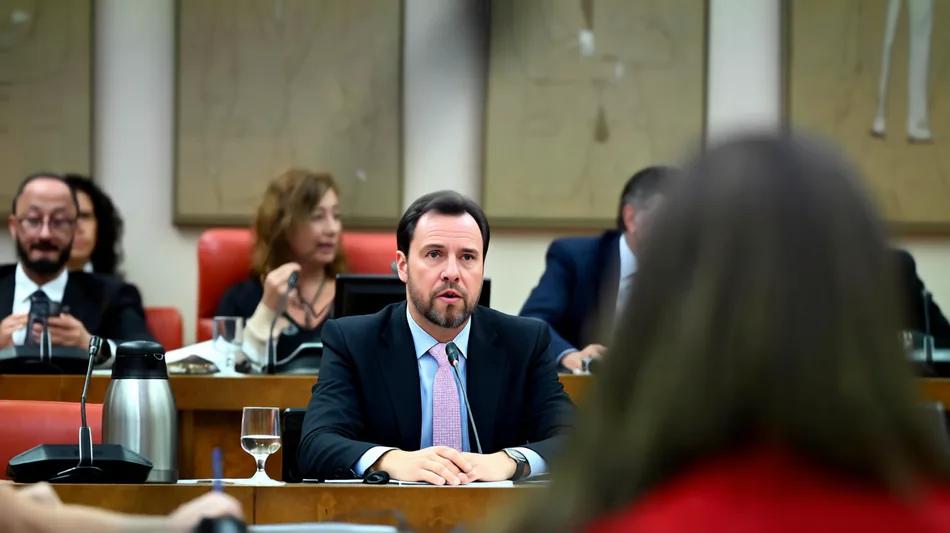
According to the commentary, Puente’s appearance before Congress resembled a somber gathering rather than a technical review of transport safety. The author described the setting as having the atmosphere of a funeral parlor café, with cold lighting and the smell of potted plants, implying that the ministerial response was performative rather than substantive. The column argues that Puente demonstrated a capacity to manage debris and grief but failed to prevent the disaster itself.
The text asserts that Puente’s ministry had ceased to function as a transport authority, instead operating as a "ministry of disaster." It claims that trains rarely passed through his department except for emergency responders, florists, and investigators. The author contends that the government prioritized the management of failure over the execution of its core competencies, focusing on deploying psychologists, journalists, and ministers in mourning attire rather than ensuring operational safety.
Puente announced his resignation following the disaster, which resulted in 115 deaths. However, the opinion piece criticizes this move as a "clean" departure that avoids admitting fault. The author compares Puente’s resignation to a theatrical exit, noting that he repeated previous excuses used during other crises, such as the Adamuz incident. The column suggests that Puente viewed his role as mounting a temporary crisis response rather than building a functional ministry.
The critique extends to Prime Minister Pedro Sánchez, alleging that the dismantling of state infrastructure was a planned necessity to fund political obligations. The author claims that Puente’s departure allowed the prime minister to shift responsibility, with Puente leaving without admitting any personal involvement in the failures. The text describes Sánchez as walking among the "bones and rubble" of Spain, suggesting that the government treats national disasters as opportunities for political theater rather than technical correction.
The commentary argues that the railway system is managed by experts who understand its complexities, but the disaster protocol is handled with a ceremonial elegance that masks incompetence. Puente’s claim to "face the music" is dismissed as hollow, with the author stating that a minister who only appears at funerals is an incompetent official. The piece notes that Puente brought a chronology of events and exculpatory hypotheses to his resignation, attempting to frame the disaster as an unavoidable event rather than a result of policy failure.
The opinion column concludes that the cycle of "debris, mourning, and forgetting" defines the current administration’s approach to crises. It asserts that Spanish trains, once renowned for their efficiency, now operate at a reduced pace due to systemic neglect. The author emphasizes that after ten months and two major catastrophes, the public views train carriages with fear, yet the government continues to distance itself from responsibility.
The text ends by noting that while Puente’s "calvary" has ended, the nation’s problems remain unresolved. It criticizes opposition leader Alberto Núñez Feijóo for demanding resignations without respecting the perceived suffering of ministers, suggesting that the political class treats disaster response as a performance. The author warns that the current approach to governance risks turning the entire country into a site of perpetual mourning, with leaders acting as victims rather than officials accountable for safety.
The Urda disaster has intensified scrutiny on Spain’s railway safety standards and the government’s crisis management protocols. The opinion piece serves as a pointed critique of the political response, arguing that the focus on individual resignations obscures deeper structural issues within the transport ministry and the broader administration.
P.Romano--GdR