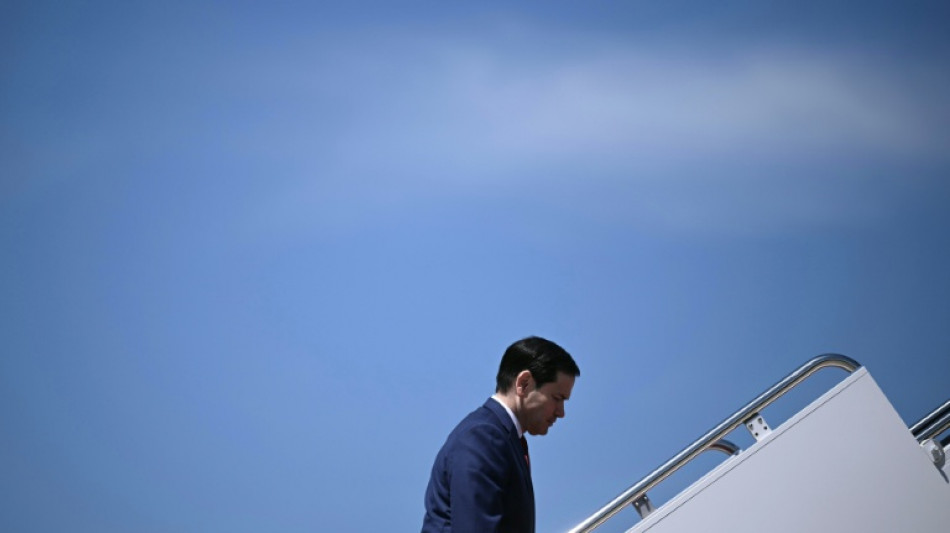
NATO allies to sound out US top diplomat after Trump Iran ire / Photo: Brendan SMIALOWSKI - AFP
NATO's European members will look to sound out US Secretary of State Marco Rubio on troop cuts by Washington Friday, as they seek to smooth over President Donald Trump's ire ahead of a July summit.
The meeting of alliance foreign ministers in the Swedish city of Helsingborg comes after the US leader lashed out at Europe over its response to his war on Iran -- and threatened he could consider quitting NATO.
The 77-year-old alliance was rattled this month when Washington abruptly announced it was withdrawing 5,000 troops from Germany after a spat between Trump and Chancellor Friedrich Merz.
While the Trump administration had long warned it would pull out forces from Europe to focus on other threats, a lack of coordination has heightened concern over Washington's reliability in the face of a menacing Russia.
One of the goals in Helsingborg "is to see whether we've turned the page or not ahead of the Ankara summit," a European diplomat said.
Judging by Rubio's comments as he set off for the talks -- denouncing NATO for failing to weigh in behind Trump on Iran -- the answer appears far from clear.
The US president is "not asking them to send their fighter jets in. But they refuse to do anything," the US top diplomat told reporters. "We were very upset about that."
Though himself a long-term supporter of the alliance, Rubio has already warned Washington needs to "re-examine" its ties to NATO after European nations restricted access to bases for US Iran operations.
In a bid to calm the storm, some allies have dispatched vessels closer to the region to help in the Strait of Hormuz when the war ends.
There has been informal chatter over a role for NATO, although so far no genuine planning.
But the US could deliver more bad news for NATO with expectations that it will cut the number of troops it puts at the alliance's disposal in case of crisis.
NATO chief Mark Rutte has played down the impact of the US withdrawals, insisting that they are "business as normal" as European allies step up their own defences.
"We support that, but it has to be done in a way where the overall deterrence and defence stays strong," Rutte said.
Trump said on Thursday that he would send 5,000 troops to Poland, an apparent reversal of Washington earlier calling off the planned deployment of 4,000 troops.
Trump said the move was based on his relationship with Poland's president Karol Nawrocki, a nationalist ally whom he said he was "proud to endorse" in elections last year.
- Ankara overshadowed? -
Since Trump's return to power last year NATO has weathered a series of crises including talking him down from trying to seize Greenland.
Now the fallout from the Iran war threatens to overshadow the summit in the Turkish capital Ankara.
NATO had been hoping to focus on showing Trump that allies were making good on their promise to him at last year's summit to ramp up defence-related spending to five percent of GDP.
Diplomats say a spate of arms deals are being lined up to show the US leader that Europe is putting its money where its mouth is.
Beneath the scramble to please Trump, there is an acceptance among Europeans that they will have to stand increasingly on their own feet.
Led by big spending Germany there is an increasing mood of steeliness -- but for now discussions are on building up Europe's role in NATO rather than creating an alternative.
One area where the Europeans are already standing more on their own is backing Ukraine.
Rutte is pushing to get more commitments to buy weapons from the United States to give to Kyiv.
In a bid to ensure all countries pulled their weight, he floated a plan to get European countries and Canada to vow 0.25 percent of GDP to arm Ukraine.
Rutte admitted that his proposal had been quickly rebuffed.
Major economies like France, Spain, and Italy have been accused of punching below their weight.
"There are also many not spending enough when it comes to the support for Ukraine," Rutte said.
A.Fumagalli--GdR