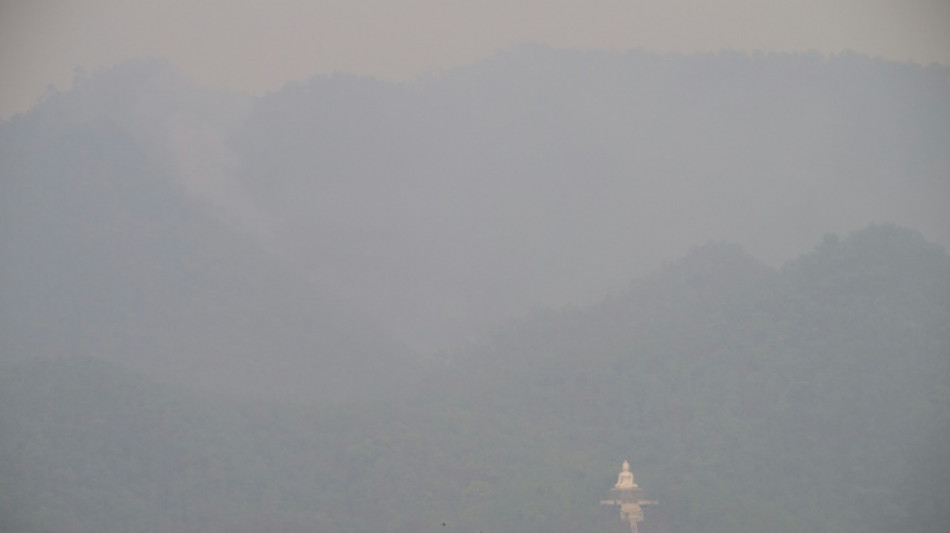
Thai lawmakers vote to revive clean air bill / Photo: ANTHONY WALLACE - AFP/File
Thailand's parliament on Friday revived a law that would enshrine the right to breathable air and tax emitters, setting up a final vote in the senate on the landmark legislation.
Several cities in Thailand, including Bangkok and northern tourist hub Chiang Mai, suffer from seasonal smog, sometimes ranking among the world's most polluted urban areas, according to air quality monitor IQAir.
Smog peaks between December and April when farmers burn crop stubble to prepare land for the next planting season.
Lawmakers voted 611 to 3, with one abstention, to advance the clean air bill.
It must now go to the senate for scrutiny and, if passed, be submitted to the prime minister and the king for endorsement.
The legislation was proposed last year by a cross-sector coalition that gathered more than 20,000 signatures over concerns about the health impacts of pollution.
But parliament was dissolved in December last year, halting the legislative process, and the bill was later reintroduced by the new cabinet before being considered on Friday.
The bill includes a "polluter pays" principle holding industrial, agricultural and transport polluters liable through fees, fines and taxes, while mandating air quality monitoring and inspections in high-risk areas.
"What a relief," Wirum Limsawart, one of the founders of Thailand's Clean Air Network, who advocated for the bill, told AFP.
However, he said he remains worried about attempts to block the law in the senate.
Previous Thai governments have stepped up efforts to tackle pollution, including with work-from-home policies and fines for farmers.
But critics say the measures have been ineffective and failed to address the root causes of the problem.
PM 2.5 particles -- fine enough to enter the bloodstream -- pose respiratory and cardiovascular health risks, according to the World Health Organisation.
G.Brambilla--GdR