In the heat, Ivorians don't think twice about using aircon / Photo: Issouf SANOGO - AFP
As Europe seeks ways to cool down in punishing temperatures, there's no way that Alexandre Anoh is going to sleep without air conditioning in Abidjan's stifling heat.
Like many Ivorians, he considers air conditioning a must and sees no downside to it, as people across western Europe question its usefulness.
Like many African countries, Ivory Coast, with its tropical climate, generally experiences high temperatures for nearly eight months of the year, forcing many people to resort to air conditioning for comfort.
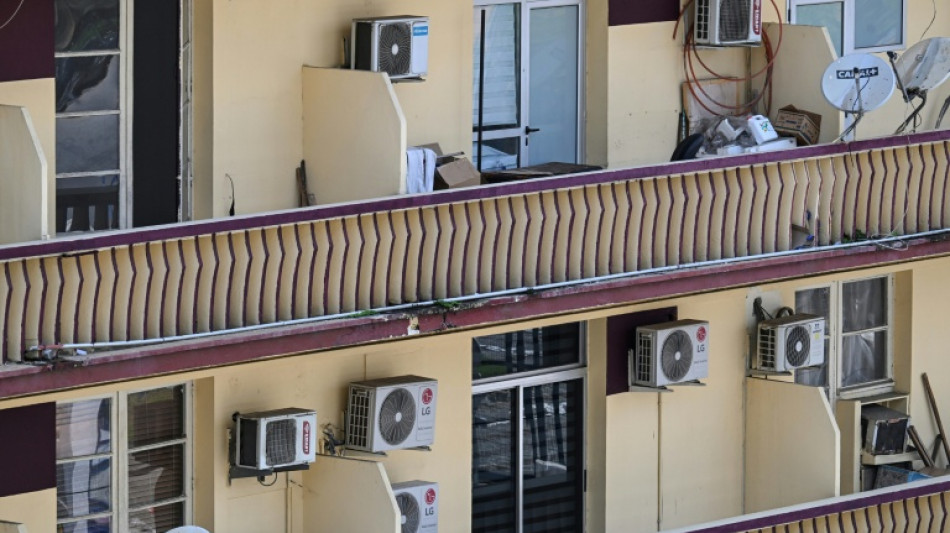
In rapidly expanding Abidjan, which is home to more than six million people, air conditioning units are everywhere, from offices and hospitals to shops.
Across the economic capital, condensers are hung high on the walls of buildings and hum incessantly.
From the wealthiest households to the more modest, everyone wants their own unit.
Several people told AFP that they did not see any downside to using air conditioning, despite concerns about greenhouse gas emissions.
"We have to have it because it feels good," said Anoh, a 48-year-old banker. "I turn mine on all the time because I can't sleep without it. It's become a habit."
Inside, the temperature is 23C while outside the thermometer read 30C on Wednesday.
- 'Vital' -
Severin Clin, a self-styled entrepreneur, said air conditioning was a "vital" issue because heat can be deadly.
"Why deprive yourself of it when you can afford it?" he asked.
Experts are divided on the environmental impact of air conditioning.
According to Annual Reviews, a science information NGP, in 2021 air conditioning and refrigeration services were responsible for more than 10 percent of global greenhouse gas emissions.
But Africa, which experiences long periods of heat, is the least-polluting continent on the plane, with less than four percent of global carbon dioxide emissions.
On the other side of the Mediterranean Sea in Europe, which has endured more than a week of extreme temperatures, air conditioning's reputation is worse, and its usefulness far from accepted everywhere.
The unprecedented heatwave, where temperatures have topped 40C in some areas, has revived debate on the subject, as the extreme heat is expected to become more frequent, last longer and intensify with climate change.
In France, where dozens of people have drowned while trying to cool off, far-right leader Marine Le Pen has promised "a massive air conditioning plan" if she becomes president next year.
Appi N'Goran, 30, doesn't understand the debate going on in Europe.
"They should use air conditioning like they use heating when it's winter because it's indispensable and can save lives in a heatwave," she said.
- Success -
According to a report from the International Energy Agency, access to effective air conditioning saved at least 190,000 lives across the world between 2019 and 2023.
Heat-related deaths among people aged 65 and over increased by 61 percent, reaching about 300,000.
Environmentalist Souleymane Cisse said having air conditioning "is no longer a matter of living standards".
The average price of air conditioning ranges between 100,000 and 150,000 CFA francs ($174-260) in Ivory Coast -- up to twice the minimum wage.
But in a number of African countries, access to it is still reserved for a certain social class, said Ablaye Seck, an energy efficiency expert in Senegal.
But many don't know about its impact on the environment.
"Very few people have any idea about the consequences of air conditioning," he said.
Seck also advocates for more airy buildings using local materials so air conditioning is used less in the future, to protect the planet and ease the strain on electricity grids, which are often severely tested during periods of intense heat.
In April, Ivory Coast had to endure several weeks of disruption in electricity distribution because of strong demand linked to high temperatures.
L.Pagani--GdR