France launches one-euro university meals for all students / Photo: Martin BUREAU - AFP/File
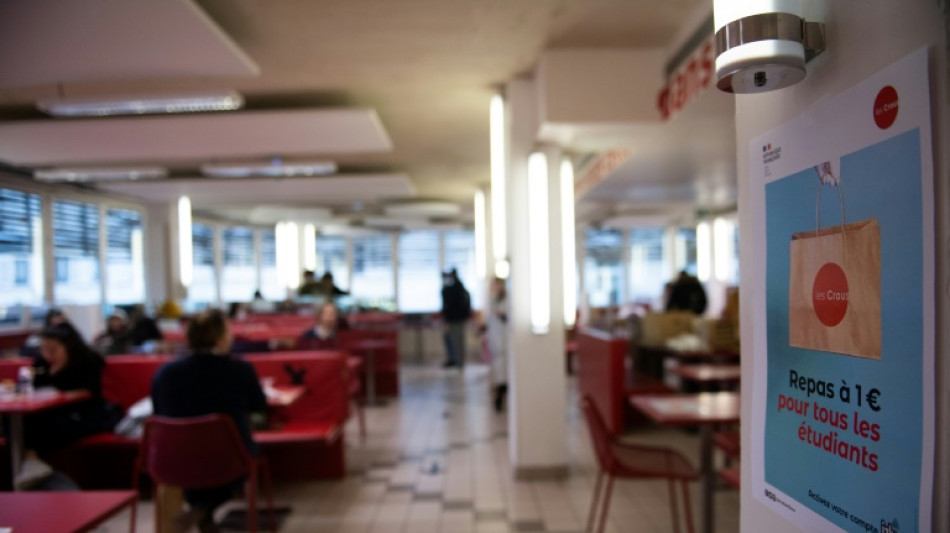
French university canteens began offering one-euro meals to all students regardless of income on Monday, in a measure designed to address financial hardship.
The move follows a push by student unions to extend the one-euro rate ($1.17) for a three-course meal to all students, down from the usual 3.30 euros.
The price, which covers a starter, main course and dessert, was previously only available to those with low incomes or receiving financial aid.
For Alexandre Ioannides, an 18-year-old student in Paris, the measure will slash his monthly canteen expenses.
"I come here 20 times a month. That's about 60 euros. Whereas now, I'll pay 20 euros," he said, adding the savings would go towards "going out or eating at a restaurant".
The policy aims to alleviate financial strain for students in France, where a January survey by a student union organisation found 48 percent have gone without food for financial reasons and 23 percent do so several times a month.
Around 667,000 students benefited from the one-euro lunch scheme in 2024, a 5.3-percent increase from the previous year, with around 46.7 million meals served at both the discounted and standard 3.30-euro rates, according to university restaurant operator Crous.
Authorities are preparing for a rise in demand, with Higher Education Minister Philippe Batiste promising 120 million euros in 2027 to back the scheme.
"It is a small internal revolution," said Batiste, who pledged to oversee the programme to ensure it does not lead to an excessive workload for canteen staff or a decline in food quality.
S.Esposito--GdR