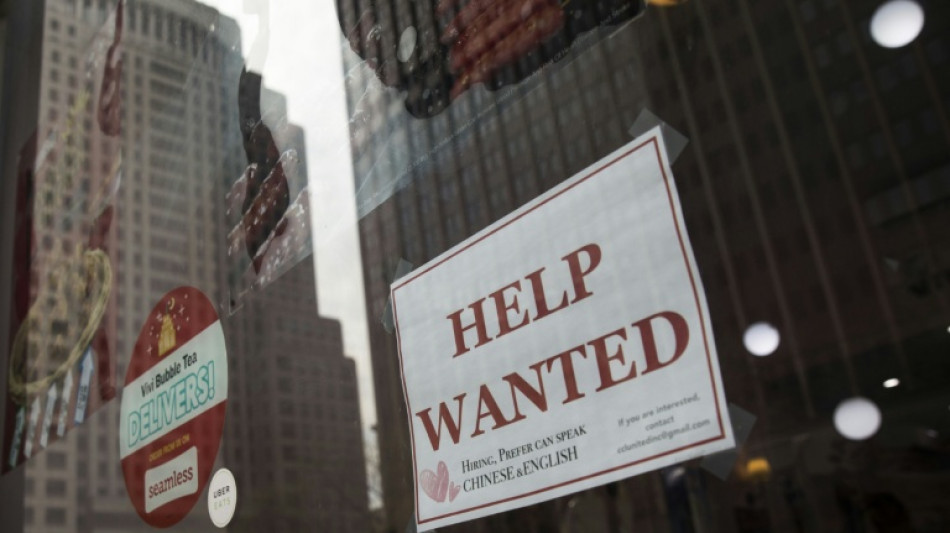
US posts weaker-than-expected job growth in June / Photo: Drew Angerer - GETTY IMAGES NORTH AMERICA/AFP
The United States posted weaker-than-expected job growth in June as data showed the labor market is facing headwinds ahead of testing midterm elections for Donald Trump's Republicans.
Total nonfarm payroll employment grew by 57,000 and the unemployment rate fell slightly to 4.2 percent, the US Bureau of Labor Statistics (BLS) said in a statement on Thursday.
After months of seesawing growth and contraction, the US job market posted strong gains in the last three months -- but Thursday's data revised some of those numbers down.
Employment in April and May were revised down by 74,000 jobs, the BLS said.
June's data badly missed market expectations, with economists polled by Dow Jones Newswires and the Wall Street Journal expecting growth of 115,000 jobs.
Nevertheless, job growth remained in positive territory, with the US Federal Reserve not expected to intervene on the labor side of its mandate.
All eyes have been on the Fed since new chair Kevin Warsh headed his first rate-setting meeting last month, with the central bank indicating its focus was firmly on taming surging inflation.
- Wages lag inflation -
Inflation in the world's largest economy has been hitting fresh three-year highs for months, as the fallout of President Trump's war on Iran ripples through the economy.
Thursday's data showed that average hourly earnings for US workers increased by 3.5 percent over the year, lagging behind inflation by 0.7 percentage points.
The disparity means that US workers have, on average, lost purchasing power, with their wages not keeping up with price rises.
The main job growth sectors included health care and social assistance, while the leisure and hospitality sector lost jobs after a strong showing the previous month.
Health care has been one of the strongest sectors for US jobs in recent months, as an aging population drives up demand for jobs at hospitals and residential care.
In June, the sector added 22,000 jobs, slower than its average monthly gain over the last 12 months, the BLS said.
Social assistance, a related sector, added 25,000 jobs -- higher than its average monthly gain over the year.
But jobs across a slew of major sectors remained stagnant, including in manufacturing, retail trade, transportation, financial activities.
The Republican Party faces midterm elections in November, with Democrats seeking to wrest control of both houses of Congress.
Trump has implemented wide-ranging and often disruptive policies aimed at bringing back manufacturing jobs to the United States.
P.Sartori--GdR