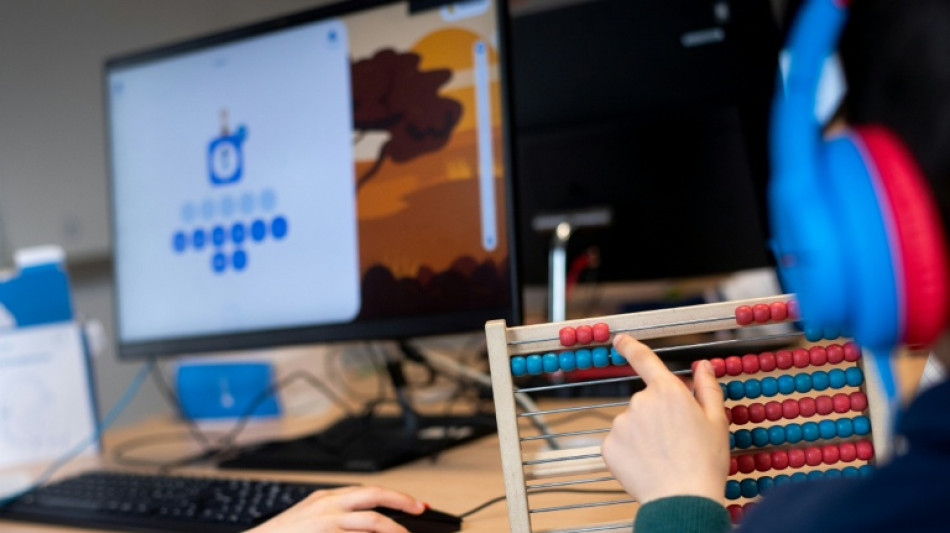
Campaigners urge G7 chiefs to protect children from AI risks / Photo: Matthieu RONDEL - AFP/File
Many governments have begun cracking down on young people's access to social media, but campaigners have appealed to G7 leaders meeting in France to move quickly on regulating generative artificial intelligence too.
Ahead of the heads of state and government meeting in Evian, eastern France, 95 young people from 19 countries gathered to call on "world leaders to protect our education, mental health and social well-being" as AI chatbots, companions and agents spread through the technology ecosystem.
"The safeguards that will shape (AI) cannot be left solely to the companies developing these tools, nor to adults who did not grow up with AI as a constant presence," they wrote in a manifesto published by the International Research-driven Alliance for AI Serving Every child (iRaise).
France added protecting children online to its list of priorities for its turn at the rotating presidency of the G7 gathering of leading developed nations.
But the chaotic geopolitical scene is likely to overshadow such considerations at this year's meeting.
Digital ministers from the G7 member countries agreed last month that generative AI could "replicate or exacerbate existing risks for minors", from sexualised "deepfake" images to manipulation of the news.
"When an innovation takes such deep root in the lives of children, we cannot make an improvised response," France's high commissioner for children Sarah El Hairy said Monday.
In recent months, governments have been laser-focused on social media.
Canada and Britain are banning access for under-16s, following in the footsteps of Australia and Indonesia, with France and Austria likely next in line.
By contrast, regulation of minors' access to AI is still in the bud -- beyond a few initiatives such as California's move to restrict chatbot use after several teen suicides.
"There's a lot of stuff we don't know, but truthfully, we can't wait 15 years again to take the right decision for our kids" as was done with social media, France's AI ambassador Clara Chappaz said Monday at an event on "youth wellbeing" organised by ChatGPT developer OpenAI in Paris.
- Mental health -
There is no shortage of alarming news about AI's impact on young people.
A "mapping" project published by campaign group everyone.AI ahead of the G7 meeting highlighted risks of "social replacement and emotional dependency" for teenagers using chatbots.
They cited a survey in prestigious medical journal JAMA that more than 13 percent of Americans aged between 12 and 21 years old were using generative AI for mental health advice.
France's Arcom media regulator said in research published Tuesday that those aged between 12 and 17 were increasingly turning to generative AI companions.
American tech giants are nevertheless hostile to any regulation, and have secured the backing of the Trump administration.
The companies argue that teens need to be trained in "AI literacy" to make the most of its potential for supporting learning.
"You can't do literacy by banning books," OpenAI's Chief Global Affairs Officer Chris Lehane said at the company's Paris event.
"You actually have to make sure the kids are being taught how to use the books, and then what to do with that information."
Youth digital rights campaign group 5Rights argues that tech giants will not flip away from their strategy of pitting innovation against regulation -- but that child safety could be a powerful counter-argument.
"You don't really see companies openly pushing back against safeguards for children because it looks very bad for them," 5Rights executive director Leanda Barrington-Leach told AFP.
"Child protection is the only area where the US can be convinced to sign up to something which says there needs to be oversight and rules."
The different voices in the debate will still need to agree on what rules are needed to protect the young.
France's Chappaz said governments should be "getting companies to evaluate the models before they come into the hands of children."
F.Gentile--GdR