US says shot down Iran drones as war reaches 100th day / Photo: FADEL SENNA - AFP
The United States said it shot down a pair of Iranian drones threatening the Strait of Hormuz, as the Middle East war reached its 100th day on Sunday with no end in sight.
The milestone came as mediator Pakistan delivered a message to Iran's supreme leader following weeks of indirect negotiations punctuated by tit-for-tat threats and sporadic exchanges of fire.
Efforts to turn a ceasefire into a lasting settlement have repeatedly stalled, while the war has rattled global markets and increased domestic pressure on US President Donald Trump ahead of midterm elections.
The uncertainty is weighing on everyday Iranians too, with fitness trainer Elaheh from Ahvaz telling AFP: "I really have gone numb."
"Daily life? It's a joke. Everything is horrible. We only try to survive," the 32-year-old added, pointing to rising prices.
Farhad, a 35-year-old chef, also said life was becoming "increasingly difficult", noting economic hardship had set in even before the war.
"Things that just a few months ago you might have considered buying have now become dreams and fairy tales," he told AFP.
- Pakistan mediation -
But there were signs of fresh diplomatic efforts over the weekend, with Pakistan's interior minister Mohsin Naqvi visiting Tehran.
Naqvi said upon his arrival Saturday that he would deliver a "special letter" from Pakistani army chief to Iran's supreme leader, as well as a message from the prime minister "regarding the current situation", according to Iranian state television.
"I think it's a very important message," said Naqvi, a frequent visitor to Iran.
Pakistani military leader Syed Asim Munir has played a key role in mediating between Iran and the US following an initial round of direct negotiations in Islamabad.
Also on Saturday, Lebanese army chief Rodolphe Haykal travelled to Pakistan for his own talks with Munir, as Beirut also seeks a permanent end to the parallel conflict playing out on its soil between Israel and Iran-backed Hezbollah.
Iran insists Lebanon be included in any agreement to end the regional war, and a source with knowledge of Haykal's visit said it was "linked to the Pakistani mediation" between Tehran and Washington.
- 'Deadlock' -
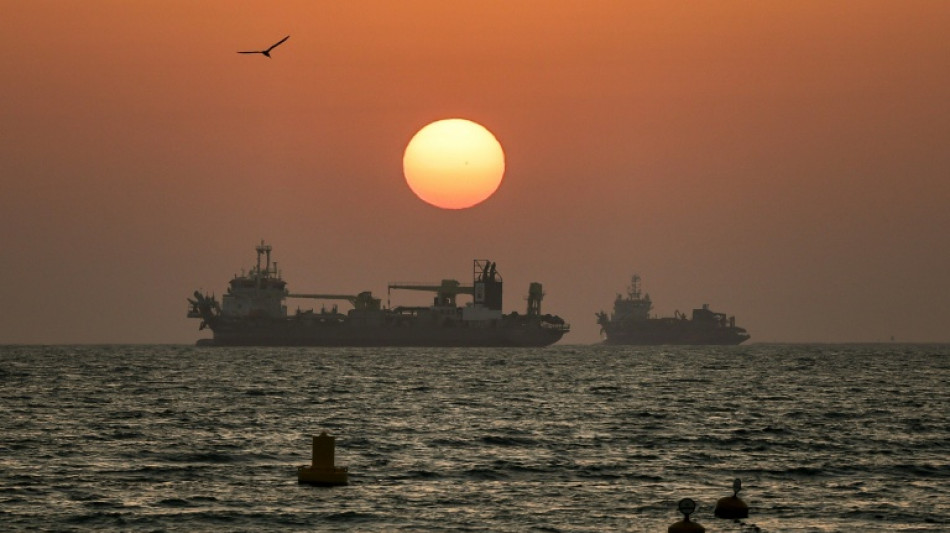
His trip came as US Central Command (CENTCOM) said it destroyed two Iranian drones "that threatened international maritime traffic in the Strait of Hormuz".
A previous drone interception and strikes on Iranian radar sites had prompted Tehran on Saturday to fire a salvo of missiles at US allies Bahrain and Kuwait.
Farhad, the chef, told AFP such exchanges felt routine at this point.
"I feel like this situation is going to stay like this for a while; a sort of suspended, up-in-the-air state where those guys fire a few missiles, these guys launch a few drones," he said.
Mohsen Rezaei, military adviser to Iranian supreme leader Ayatollah Mojtaba Khamenei, had earlier told CNN that negotiations with the US "are at a deadlock, and Trump must break this deadlock", as he called for the release of some $24 billion in frozen Iranian assets.
But Washington instead may seek to use those funds to pay for damage wrought by Iranian strikes on Gulf allies.
The US will work "to allow Iranian assets to be made available to our Gulf allies to support rebuilding and repairs", a source familiar with Treasury Secretary Scott Bessent's thinking said.
Iran's top diplomat Abbas Araghchi, in an intervew with CNN published Sunday, described negotiating with Washington as "very cumbersome".
"The main problem of negotiating with this administration is that you have to face so many changing positions, moving the goal posts, different statements, contradictory remarks," he said.
- Lebanon front -
Lebanon was drawn into the wider war when Hezbollah attacked Israel on March 2 in support of Iran.
An April ceasefire was never observed, while a new conditional truce agreement announced in recent days was rejected by Hezbollah almost immediately.
Prime Minister Benjamin Netanyahu announced Sunday that his military had "struck a militant command centre" Sunday in Beirut's southern suburbs, a Hezbollah stronghold, in response to "fire towards Israeli territory".
Lebanon's state-run National News Agency said the strikes targeted two apartments in two buildings.
An AFP photographer saw two apartments damaged in a building on a narrow street, and traffic congestion as residents tried to leave the suburb while the Lebanese army deployed to the area.
Iran's Araghchi had previously warned that any attack on Beirut would trigger a "full-scale resumption" of the Middle East war
burs/smw/dc
L.Costa--GdR