Iran warns 'not even started' in Hormuz / Photo: - - AFP
Iran's powerful chief negotiator warned the United States against any further escalation in the Strait of Hormuz, after a spate of attacks risked reigniting the Middle East war.
The US military said its Apache and Seahawk helicopters hit six Iranian boats threatening commercial shipping and its forces repelled missile and drones on Monday, while the UAE reported fresh Iranian attacks on its territory.
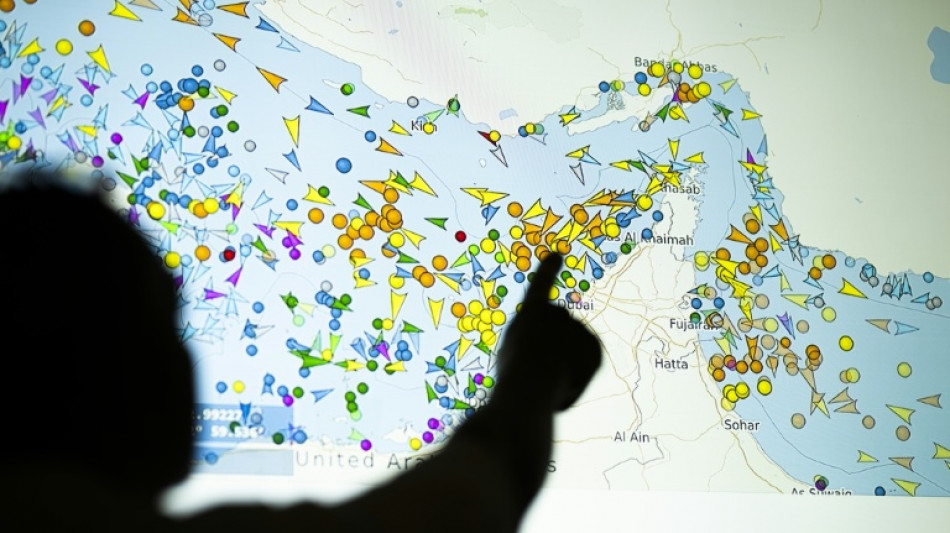
Iran's latest warning followed US President Donald Trump announcing a plan to guide ships from neutral countries out of the Gulf, before the rivals traded fire as they vie for control of the waterway with duelling maritime blockades.
"We know full well that the continuation of the status quo is intolerable for America; whilst we have not even started yet," Mohammad Bagher Ghalibaf, also the speaker in Iran's parliament, wrote in a post on X.
The war, which erupted more than two months ago with US-Israeli strikes on Iran, has spread throughout the Middle East and roiled the global economy, impacting hundreds of millions worldwide despite a weeks-long ceasefire.
Ghalibaf said the actions of the US and its allies had put shipping security at risk, but said their "malign presence will diminish", with Tehran vowing not to surrender control of the Hormuz strait.
It denied any of its combat ships had been hit in US attacks but accused Washington of killing five civilian passengers on boats.
But despite the clashes under Trump's effort dubbed "Project Freedom", Denmark's freight giant Maersk said on Tuesday that one of its ships had successfully sailed through the Hormuz under US escort.
Iran's military had threatened to attack any US forces that approached or entered the trade route.
- 'Direct consequences' -
The UAE called Iranian missile and drone attacks including one on an energy facility in Fujairah "a dangerous escalation and an unacceptable transgression", while key US ally Saudi Arabia called Tuesday for efforts "to reach a political solution".
But negotiations between Washington and Tehran remain deadlocked, with only one round of direct peace talks held so far.
The sharpest escalation since the ceasefire delivered another shock to the global economy, with stocks sinking on Tuesday after crude prices surged a day earlier as the tensions raised fears over the truce, with no sign of a deal to reopen the strait.
Soaring energy costs for consumers due to the war have caused economic pain around the world and created a headache for Trump months before midterm elections.
Washington's European allies are also concerned that the longer the strait remains closed the more their economies will suffer.
"These attacks are unacceptable," EU chief Ursula von der Leyen said on X, adding that "security in the (Gulf) region has direct consequences for Europe".
German Chancellor Friedrich Merz also implored Tehran to "return to the negotiating table and stop holding the region and the world hostage", echoing calls from French President Emmanuel Macron and British Prime Minister Keir Starmer.
UAE authorities said four cruise missiles were launched, with three successfully shot down and another falling into the sea.
Iran also fired drones at a tanker affiliated with the UAE's state-owned oil giant ADNOC, they said.
Tehran said it had "no pre-planned programme" to target oil facilities in the UAE, but it blamed Washington's attempt to break Tehran's blockade of the Hormuz strait for its attacks.
"What happened was the product of the US military's adventurism to create a passage for ships to illegally pass through the forbidden passages of the Strait of Hormuz, and the US military must be held accountable for it," an Iranian military official told state TV.
- High alert -
An Israeli military official said Monday that the army remained on high alert and was monitoring the situation after the US said it downed the Iranian missiles and drones.
Israel and Iran-backed Hezbollah have kept up their attacks despite a ceasefire in Lebanon.
Lebanese President Joseph Aoun on Monday said a security deal and an end to Israeli attacks were needed before any meeting with Israeli Prime Minister Benjamin Netanyahu, which is being sought by Washington.
Israeli and Lebanese representatives last month met twice in Washington -- the first such meetings in decades, which came after Hezbollah drew Lebanon into the Middle East war on March 2, sparking heavy Israeli strikes and a ground invasion.
burs-jfx/ser
G.Galli--GdR