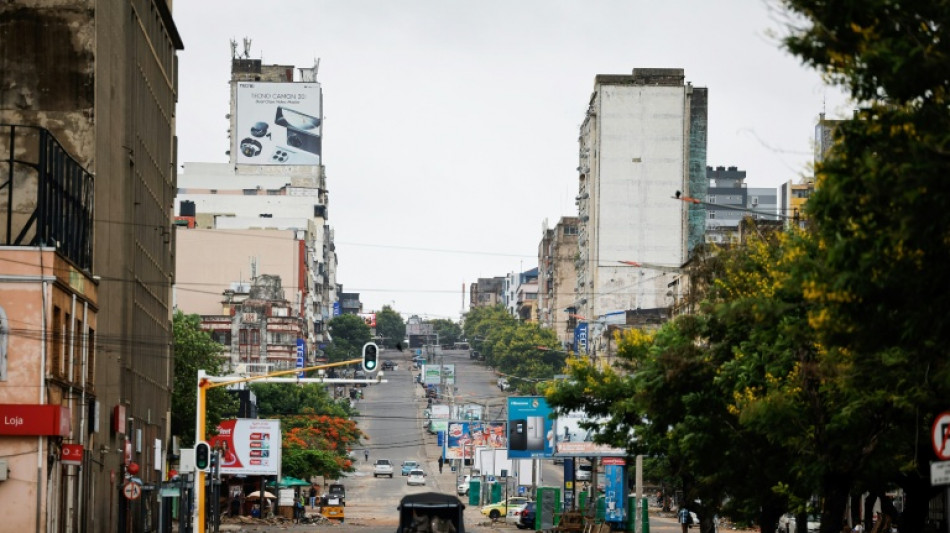
From transit to consumption: drug use surges in Mozambique / Photo: AMILTON NEVES - AFP
In sweltering heat, gaunt Elton Raimundo Joaquim scavenged the streets near the largest drug den in Mozambique's capital for scraps of metal to sell.
"I used to record music. I needed inspiration when I went into the studio," the 27-year-old said, crouching as he explained his fall into addiction, while a fly circled an open wound on his shoulder.
Joaquim is among a growing number of drug users in the southern African country officials say is increasingly a consumer of illicit drugs, not just a transit point in the intercontinental trade.
Hospital admissions linked to drug use rose 38 percent last year to more than 32,280, according to government figures that experts say reflect only a fraction of the problem.
Joaquim tried rehab. "I couldn't handle it," he said, admitting he stole to pay for cannabis, crack and heroin, the main drugs in circulation in Mozambique.
"The drug pushes you to buy more," he said.
University graduate Paulo Ferrao admitted himself to the REMAR rehabilitation centre on the outskirts of Maputo four years ago as a "birthday gift" to his sister.
Patients are assigned tasks such as cleaning, metalwork, carpentry and attending religious services.
Now entrusted with responsibilities that include public relations, Ferrao said it was becoming easier for young people to obtain drugs, including crystal meth.
"We're receiving more methamphetamine cases, which means heroin is no longer enough for the people behind drug trafficking," Ferrao said.
- International connections -
Mozambique's position along trafficking routes between drug producers and markets, its 2,500-kilometre (1,600-mile) Indian Ocean coastline and its porous borders make it a prime transit point, said the state drug prevention bureau, GCPCD.
"Up until about five years ago, our country was seen only as a transit point," spokesman Jose Bambo told AFP.
"The drugs arrived in Mozambique but they were distributed to the rest of the world, Africa in particular," he said.
"Now our main concern is that our country has also become a consumer."
The country has joined forces with international anti-drugs bodies and authorities across the region -- from Tanzania to South Africa -- to tackle the problem, including through data sharing, Bambo said.
The cooperation had facilitated the extradition from Botswana in recent weeks of six Mexican nationals accused of manufacturing drugs in a village outside Maputo where methamphetamine, manufacturing equipment and chemical precursors were reportedly seized.
"This year four individuals of Mexican origin who were involved in drug trafficking were arrested," Bambo said.
Mozambique lacked tools like scanners and canine units to "intercept drugs before they reach the neighbourhoods", he said.
It also did not have enough specialists in the sector, while traffickers constantly altered their methods.
"In recent times, drugs have been coming in disguised as cosmetics, as snacks, as construction materials," the official said.
- Fentanyl, a new arrival -
Historically a transit point for heroin and methamphetamine, Mozambique has seen an increase in cocaine flows as part of the "Lusophone route" that links Brazil with other Portuguese-speaking countries, said Antonio De Vivo, the country head of the UN drugs office.
Traffic in the synthetic opioid fentanyl -- the highly addictive drug underpinning a deadly epidemic in the United States -- has also emerged, with authorities reporting the seizure of more than five tonnes this year.
"Whenever you are a transit country, a small portion of what is transiting usually stays," De Vivo told AFP.
Low-income countries with young populations, such as Mozambique, are particularly vulnerable to cheaper synthetic drugs, the official said.
The situation reflected a broader regional picture, with South Africa also uncovering manufacturing labs where Mexicans allegedly operated as chemists or trainers of a local workforce, he said.
An AFP investigation published Thursday showed how South Africa has become an ideal country for Mexico's Sinaloa cartel to produce meth and sell it as far away as Australia.
"Local production will inevitably lead to an increase in consumption," De Vivo said.
"The increase that we are recording is steady and continuous, which means that the problem is going to probably get bigger," De Vivo said.
P.Sartori--GdR