The banking fraud scandal rattling Brazil's elite / Photo: NELSON ALMEIDA - AFP/File
When Brazilian businessman Daniel Vorcaro was arrested last year over what may be the country's biggest ever banking fraud scandal, he boasted to police that he had friends in high places.
The collapse of his Master Bank and a snowballing fraud investigation are becoming an ever-bigger headache for authorities, exposing a web of links between financiers, top judges and politicians across the spectrum in an election year.
The case has gripped local media in a country that is still sensitive to elite corruption scandals after the so-called Lava Jato fraud probe from 2014 to 2021 ensnared dozens of senior politicians and executives.
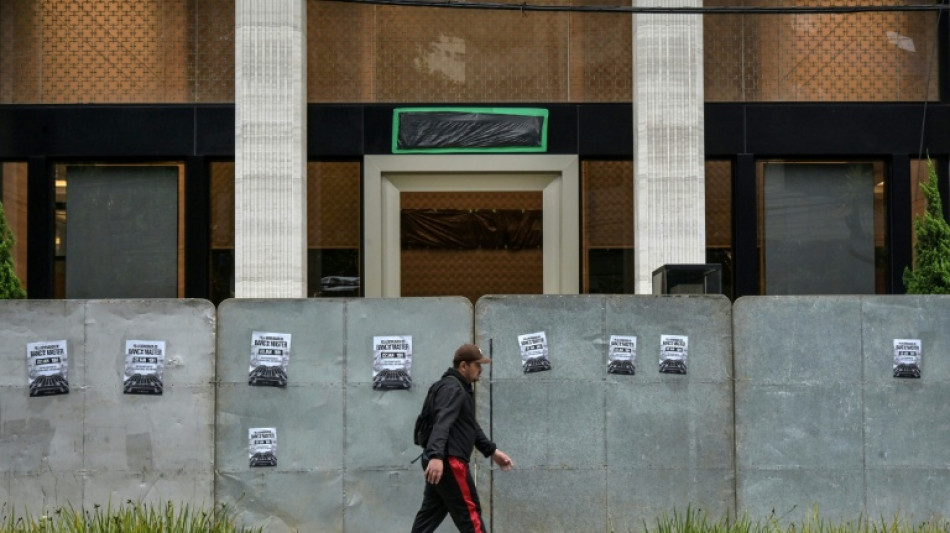
Vorcaro, 42, a banker with a flashy lifestyle, was the major shareholder in the small private Master Bank which operated in Faria Lima -- Sao Paulo's financial hub.
His bank offered investment products that were more profitable than those of his competitors and in 2024, the Central Bank realized Master did not have the resources to meet its obligations.
In November 2025, police arrested Vorcaro over an alleged fraudulent scheme between Master and BRB, a state-owned bank in Brasilia.
Authorities liquidated Master Bank, leaving more than $7 billion in debt due to some 800,000 investors who have received payouts from Brazil’s deposit guarantee fund.
Several other executives have since been arrested and Vorcaro is on supervised release pending the outcome of the investigation.
In a statement given to police, Vorcaro said he had "friends in all branches of government."
- High-profile connections -
Not long after Vorcaro's arrest, the names of several high-profile officials began cropping up in the media.
The businessman's lawyers requested that the case be transferred directly to the Supreme Court.
One of the justices in the court, Jose Dias Toffoli, ordered that the proceedings be kept secret and that all investigative steps be conducted under his supervision.
Local media revealed that in the same month that Vorcaro was arrested, Dias Toffoli had shared a private jet with the lawyer of another Master executive arrested in the case, to travel to the 2025 Copa Libertadores final in Peru.
It then emerged that Vorcaro's brother-in-law, who is also under investigation, had purchased part of a resort in 2021 from Dias Toffoli's brothers, through a management company also under suspicion in the Master case.
Media outlets also reported that powerful Supreme Court justice Alexandre Moraes -- who is involved in virtually every high-profile case in Brazil -- had met with the director of the Central Bank to discuss the Master case in the months before it collapsed.
It later came to light that Moraes' wife's law firm had a multi-million dollar contract with Vorcaro's bank.
The judge admitted to the meetings but denied that "any matter" concerning the case was discussed.
- 'Largest financial scandal' -
In 2024, at a time when the bank's liquidity problems were already known, Vorcaro held a meeting with President Luiz Inacio Lula da Silva.
Lula said Vorcaro had complained there were "people trying to bring me down."
"I told him (Vorcaro): there will be no political position for or against Master bank, but a technical investigation by the Central Bank," Lula said Thursday in an interview with the UOL news portal.
"Anyone involved in this will have to pay the price for the irresponsibility of causing ...perhaps the largest financial scandal in this country’s history," Lula said.
Master also contracted a multi-million dollar consulting service in 2023 from the law firm of Ricardo Lewandowski, who served as Lula's justice minister from 2024 until January 2025.
The government said that Lewandowski had terminated his contracts before taking office.
It then said that Vorcaro's brother-in-law, an evangelical pastor, had been the largest donor to far-right former president Jair Bolsonaro's failed re-election campaign in 2022.
"If we see the Bolsonaro movement, the center, and part of Lula's PT (Workers' Party) trying to downplay the case, it's because they understand the potential impact," said political scientist Marco Antonio Carvalho Teixeira of the Getulio Vargas Foundation.
S.Rinaldi--GdR