Canada's Top 5 Affordable Electric Vehicles for 2027 Under $50,000
As electric vehicle prices in Canada approach parity with gas-powered cars, buyers now have access to more affordable options than ever before. Five models stand out for their combination of low cost, competitive range, and advanced features, offering significant value for consumers navigating the transition to electrified transport.
The Canadian electric vehicle market is undergoing a significant shift as prices for all-electric models begin to align with those of traditional internal combustion engines. According to recent data, the average transaction price for a new vehicle in Canada stands between $63,400 and $63,665. In contrast, JD Power reports that the average transaction price for an electric vehicle is approximately $49,500. This disparity creates a favorable environment for buyers seeking value, particularly when factoring in available government incentives.
To qualify for the federal rebate of $5,000, the transaction price of the EV must be $50,000 or less, though vehicles manufactured in the United States and China are excluded from this specific incentive. Provincial rebates further reduce costs; for instance, Quebec offers a $2,000 rebate for vehicles with a manufacturer’s suggested retail price (MSRP) under $65,000. These financial mechanisms, combined with an expanding lineup of more than 110 all-electric models available in the country according to the Canadian Vehicle Manufacturers’ Association, have made sub-$50,000 EVs a viable and attractive option for many consumers.
The 2027 Nissan Leaf continues to occupy a unique position in this segment as one of the most affordable entry points into electric driving. The entry-level S trim carries an MSRP below $35,000 before rebates. This third-generation front-wheel-drive compact crossover has evolved from its hatchback origins into a vehicle with increased ground clearance and a sloping rear roofline. It is powered by a 53-kWh battery pack that provides an advertised range of 341 kilometres on a full charge. The electric motor delivers 174 horsepower and 254 lb-ft of torque.
Despite its lower price point, the Leaf S retains technology typically found in higher trims. The cabin includes heated front seats, a 12.3-inch touchscreen infotainment system, a matching 12.3-inch digital gauge cluster, 5G Wi-Fi connectivity, and multiple USB ports. It also features ProPilot Assist, a suite of driver-assistance technologies. For buyers requiring greater range without exceeding the $50,000 threshold, the S+ trim offers a larger 75-kWh battery pack that extends range to just over 450 kilometres. This upgrade also improves charging capabilities, offering 150-kW DC fast-charging capacity and 11-kW onboard AC charging, compared to the base model’s 105-kW and 7-kW limits respectively.
Tesla’s Model 3 remains a key competitor in the affordable EV space, boasting specifications that challenge traditional automakers. The vehicle features a 64-kWh battery pack that supports a range of 463 kilometres. It is equipped with DC fast-charging capabilities topping out at 175 kW and AC charging up to 12 kW. The electric powertrain produces 286 horsepower. Uniquely among the models in this price bracket, the Model 3 utilizes a rear-wheel-drive configuration.
The interior of the Model 3 is characterized by its minimalist design, centered around a 15.4-inch vertical touchscreen and an eight-inch passenger display. Standard equipment includes heated and ventilated front seats, heated rear seats, a heated steering wheel, and dual wireless phone chargers. However, prospective buyers face logistical hurdles. Tesla has paused all Canadian orders for the Model 3 until at least March due to reaching its allowable quota of Chinese-built EVs imported under the six-percent tariff rate. Additionally, some consumers may consider the political associations of the company’s leadership when making their purchasing decision.
Kia has expanded its electric lineup in Canada with the introduction of the all-new EV3 sub-compact crossover. The vehicle is available in front-wheel-drive and all-wheel-drive configurations, offering two battery options: a base 58.3-kWh pack and a long-range 81.4-kWh pack. The entry-level Light trim, priced at $36,995, provides approximately 350 kilometres of range. Moving up to the Wind trim, which costs an additional $4,000, buyers gain access to the larger battery pack, extending range to 517 kilometres. This trim also includes a standard heat pump, which improves energy efficiency in colder climates.
The EV3 utilizes Kia’s 400-volt E-GMP architecture, which facilitates rapid charging times. During initial driving evaluations on Vancouver Island, the vehicle demonstrated strong handling characteristics. The steering was noted to be heavier than that of the mid-size EV5, providing a sense of stability and fun for a smaller crossover. Interior space is also competitive within its segment, offering practicality for urban drivers.
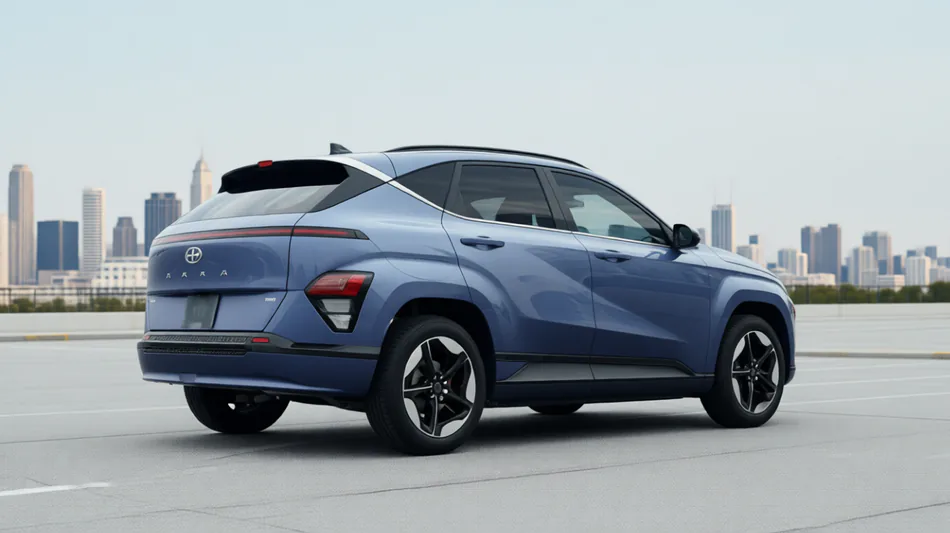
Hyundai’s Kona EV remains a top seller in the Canadian market, appealing particularly to urban dwellers due to its compact footprint. Despite its size, the vehicle maintains stability at highway speeds. Natural Resources Canada rates the Kona’s range at 420 kilometres, derived from its 65-kWh battery. The electric motor produces 201 horsepower, enabling acceleration from zero to 100 km/h in six seconds.
A distinguishing feature of the new Kona EV is its retention of physical controls. Unlike many modern vehicles that rely heavily on haptic buttons and touchscreen menus for functions like mirror adjustment and climate control, the Kona retains tactile switches. This design choice allows drivers familiar with recent gas-powered vehicles to operate the car’s systems intuitively without navigating complex digital interfaces.
The 2027 Chevrolet Bolt RS represents a high-value option in the subcompact hatchback segment. The top-tier RS trim features sport styling, black wheels, and a sport-inspired cabin interior. It is powered by a 65-kWh battery that supports up to 150-kW fast-charging and delivers 210 horsepower. The infotainment system includes an 11.3-inch touchscreen with Google built-in capabilities. The base LS trim starts at an even lower price of $43,441.
Drivers have described the Bolt RS as a fun-to-drive vehicle suitable for both urban commuting and road trips, thanks to its range exceeding 400 kilometres. However, the model faces an uncertain future. General Motors has announced the discontinuation of Bolt production at its Kansas plant in 2027. This decision is driven by tariffs that have made importing certain vehicles less economically viable, leading GM to shift production of the Chevrolet Equinox from Mexico and the Buick Envision from China to the Kansas facility. The cancellation has drawn comparisons to previous industry shifts away from electric vehicles, raising questions about long-term support for current owners.
As the market continues to evolve, these five models illustrate the growing diversity and affordability of electric vehicles in Canada. With prices approaching parity with gas cars and a wider selection of trims and features, consumers have more opportunities than ever to transition to electric mobility without compromising on range, technology, or value.
L.Cattaneo--GdR