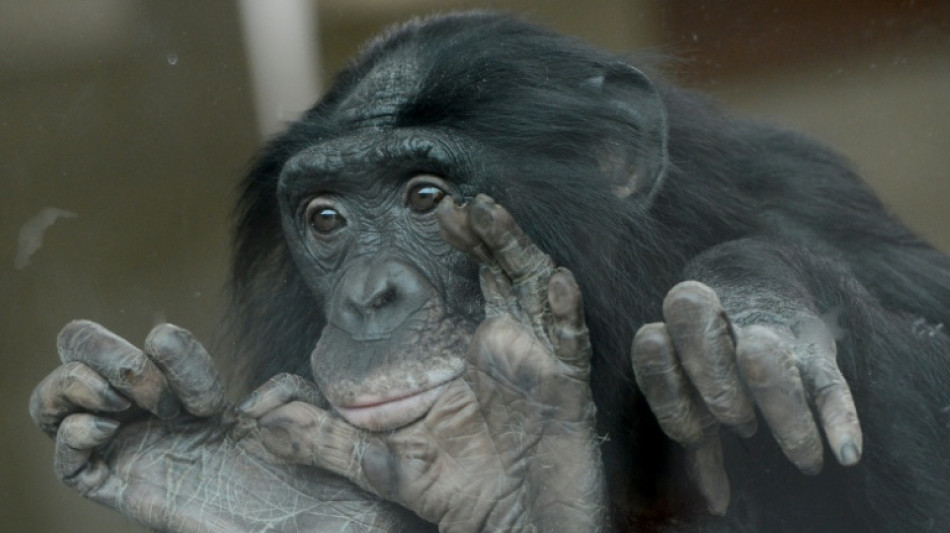
Despite reputation, bonobos are aggressive, particularly toward males: study / Photo: FRANZISKA KRAUFMANN - DPA/AFP
Historically considered a more peaceful species than their chimpanzee cousins, bonobos are actually just as aggressive -- but target their ire most often at males, according to a study published Wednesday.
Living in matriarchal societies, the gentle-eyed primates once dubbed "hippy apes" are far from violence-free, a group of European researchers reported in the journal Science Advances.
They studied 13 groups of bonobos and nine groups of chimpanzees -- who conversely live in patriarchal systems and are well known for their aggressivity -- in zoos, seeking to find out which is more prone to attacks.
Measuring different types of aggressive behavior, both physical and not -- such as throwing objects, intimidation, or biting and slapping -- they found "no overall differences in absolute aggression rates between the two species."
However, differences emerged "in how the aggression is distributed among group members," co-author Nicky Staes told AFP.
"In chimpanzees aggression mostly comes from males and is directed towards both males and females, whereas in bonobos aggression levels are quite equal in both sexes but are mostly directed at males," she said.
Emile Bryon, another co-author, said that, as bonobos live in female-dominant groups, the fact that both females and males direct most of their aggression toward males surprised researchers.
"Dominant individuals compete amongst each other for resources," he said, so "one could expect aggression among bonobo females. But our study says otherwise."
The relative lack of aggression among female bonobos could be explained by the species' well-studied use of sex to defuse conflicts, or the aggression may be "redirected towards males, who become buffers in the females' competitive dynamics," Bryon said.
- Aggressive ancestors? -
The authors noted limitations to their findings due to the apes living in captivity, where food is not as much of a source of tension, but highlighted the variability of aggressiveness in both species.
Some groups of bonobos and chimpanzees appeared particularly prone to violence and others more peaceful, which "suggests that limiting our understanding of a species to a handful of groups can prevent grasping the full species-wide diversity in behavioral expressions," said Bryon.
As our closest primate relatives, the behavior of chimpanzees and bonobos are of particular interest to science.
"There is big debate in evolutionary anthropology whether humans descended from a violent ape or a more cooperative, peaceful one," Staes explained.
The new study suggests that "aggression was likely present in the common ancestor of humans, chimpanzees, and bonobos."
They also show that aggression can vary widely among apes, said Bryon.
"Recognizing this variation and understanding its roots suggests that it can be better understood, managed, and even reduced."
F.Gentile--GdR