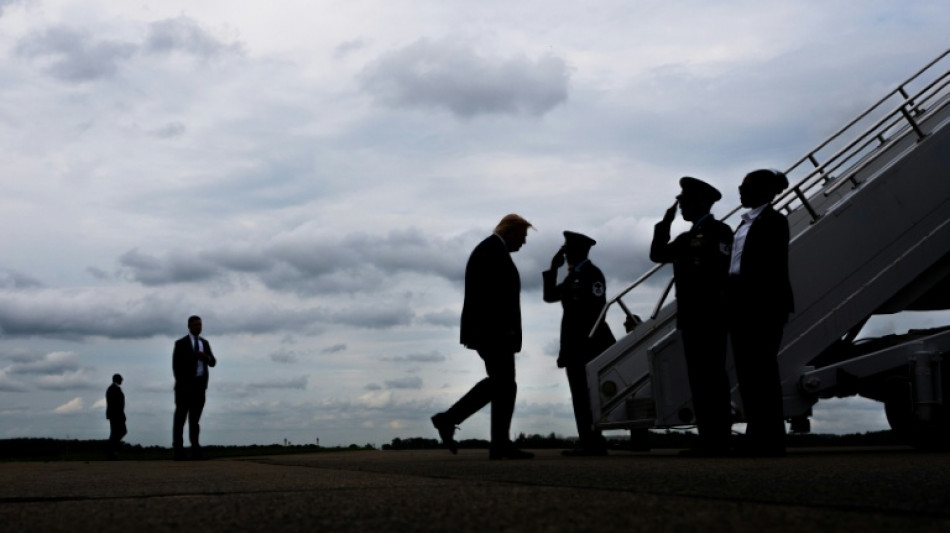
US hopeful Hormuz strait deal will be done 'today or tomorrow' after ship hit / Photo: Aaron Schwartz - AFP
The United States was hopeful that a deal to reopen the Strait of Hormuz would be done "today or tomorrow", a top US official said Tuesday, hours after yet another cargo ship was hit in the vital waterway.
US Treasury Secretary Scott Bessent told broadcaster CNBC "there is a chance we may have a deal" in the coming hours, a day after President Donald Trump said the strait might reopen on Tuesday.
Speaking from the White House on Monday, the US leader continued his now familiar combination of bullish optimism about diplomacy and bellicose threats, warning that this was Iran's "last chance before decapitation".
Tehran and Washington have been at war since February 28, when the US and Israel launched surprise attacks on Iran. Despite a ceasefire and a preliminary deal in the months since, diplomacy has failed to end the conflict.
The Strait of Hormuz, a key conduit for global oil and gas supplies, has been the spark for repeated returns to fighting.
Iran wants to maintain control over and charge tolls for the strait, powers it did not exercise before the war and which the US fiercely opposes.
In what has become a regular pattern, Trump last week threatened to hit Iran "very hard", potentially with attacks against civilian infrastructure, only to pull back on Saturday, saying the "perimeters" of a deal were in place.
On Monday, he said he had agreed to continue to pursue talks with Iran at the request of Saudi Arabia, the United Arab Emirates, Qatar and other countries.
But Iran's foreign ministry denied that negotiations with Washington were taking place, even as Trump insisted they were. "We are talking right now," the US president said.
Qatar, which has been mediating negotiations, said on Tuesday that diplomatic efforts were ongoing but that there were no direct Iran-US talks planned.
- 'Not very complex' -
Trump said he expected to know by Tuesday how the talks were going, "one way or the other", but insisted "it's not very complex".
The diplomatic focus is on reopening Hormuz, which Trump said could come "literally by tomorrow", and the denuclearisation of Iran, which he said could "take a little while".
Hours earlier on social media, the president had called Tehran "duplicitous" for saying it was not negotiating.
"Whether Iran wants to admit it or not, we are, in fact, talking of a solution to a problem that they have caused, for decades," he added.
Trump pointed to the United States' counter-blockade of Iranian ports, saying: "Nothing gets through to Iran, unless we want it to, and nothing will get through, unless a Deal, or Total Surrender, is accomplished."
More than five months into a war that has cost Washington billions of dollars, Iran remains able to fire missiles and drones at US and allied targets in the region and retains its enriched uranium stockpiles.
Trump has placed particular emphasis on ending Iran's nuclear programme, which Western nations say is aimed at acquiring atomic weapons. Tehran insists it is a civilian programme.
Early on Tuesday, Britain's maritime security agency UKMTO said a cargo vessel had been struck by an "unknown projectile" in the Strait of Hormuz off the coast of Oman.
The vessel was not named and authorities were investigating, UKMTO said, without offering information on damage or injuries.
Iran continues to impose an effective blockade on the strait and insists ships coordinate crossings with it and take a route that hugs the Iranian coast.
Many vessels have instead chosen to take a southern route, close to Oman on the opposite side of the strait.
Iranian foreign ministry spokesman Esmaeil Baqaei has said Tehran is negotiating a new route with Muscat, but that this was not about reopening Hormuz.
burs-dcp/amj
C.Gatti--GdR