Stocks rally falters, oil rises as US-Iran talks postponed / Photo: Jung Yeon-je - AFP
Stock markets were mixed on Friday and oil prices rose after Switzerland said planned talks following up on the US-Iran agreement had been postponed, dealing a blow to the week-long rally.
Equities have been on a tear since the two announced last weekend that they would end their three-month conflict and reopen the Strait of Hormuz, fuelling global relief as economies have been hit by energy shortages and surging inflation.
The agreement has been signed separately by US President Donald Trump and his Iranian counterpart Masoud Pezeshkian, and approved by Iran's supreme leader.
That was meant to signal the beginning of 60 days of talks on wider issues, including Tehran's nuclear programme.
But Swiss officials said they would not start on Friday as expected, hours after US Vice President JD Vance's departure for the country was cancelled, with a spokesperson saying the "logistics of these negotiations have never been simple or predictable".
The deal was also meant to halt the fighting in Lebanon, but Israel's military announced new strikes against Hezbollah targets in the nation's south. Lebanon has been a major sticking point in reaching a US-Iran deal.
"The planned talks between the US, Iran, Qatar and Pakistan have been postponed," the Swiss foreign ministry said in a message to AFP.
"Switzerland remains ready to facilitate these talks. The relevant preparatory work at Burgenstock is continuing," it said, without providing a new date for the talks.
Iran's Tasnim news agency had said "nothing has been confirmed" about the Tehran delegation's trip to Switzerland.
The news sparked a reverse in several equity markets that had been heading for a positive end, with profit-taking adding to the selling.
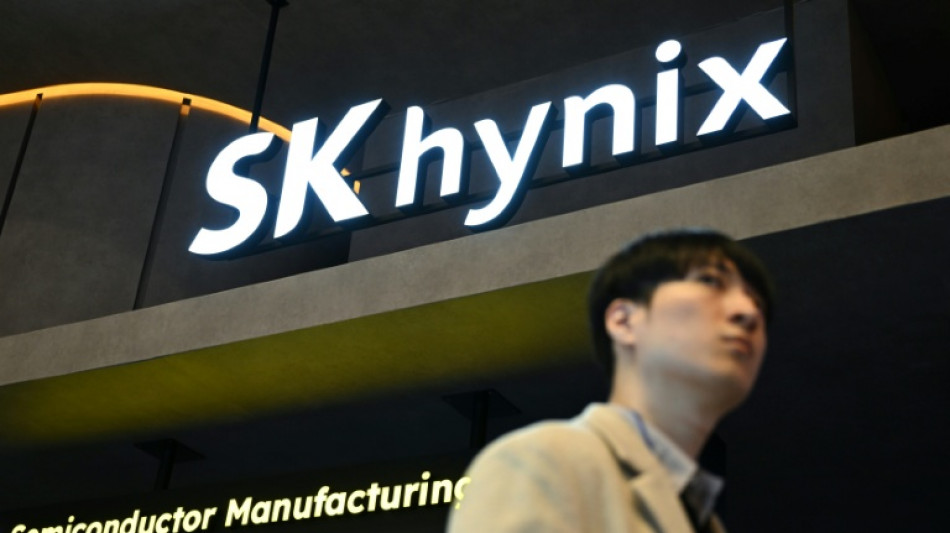
Seoul, which has hit multiple records this week and topped 9,000 points for the first time on Thursday, ended in the red after a strong start to the day led by tech firms.
There were also losses in Tokyo, Singapore, Sydney, Mumbai, Bangkok and Jakarta but Tokyo, Wellington and Manila edged up.
London dipped at the open but Paris and Frankfurt rose.
Oil prices, which have tanked around 10 percent this week, climbed with West Texas Intermediate up around 1.8 percent.
"With the deal signed, that geopolitical cloud is lifting, but markets have learned more than once that a resolution can unravel quickly," Josh Gilbert, at eToro, said.
"The hard work starts now, and investors will likely be cautious until we've got an air-tight deal and traffic genuinely flowing in full through the strait again."
American forces lifted on Thursday their naval blockade of Iranian ports that had prevented ships from sailing to or from the Islamic republic, the US military said, noting that its warships "will remain in the general area".
Activity was still muted in the Strait of Hormuz, the strategic bottleneck for energy shipments that Iran blockaded during the conflict.
Observers have pointed out that while the waterway -- through which about a fifth of crude passes -- has reopened, it could take some time before supplies are back up to pre-war levels.
The US-Iran agreement had allowed investors to look past Tuesday's Federal Reserve meeting, which ended with officials indicating they could hike interest rates before the end of the year owing to elevated inflation caused by the war.
Still, Forex.com's Fawad Razaqzada said traders would turn their focus back to the economic outlook.
"What is almost certain to happen now is that markets will become increasingly data-dependent once again. For now, equity bulls maintain some control," he wrote in a commentary.
"However, with valuations still elevated and a lack of obvious near-term catalysts, the prospect of profit-taking or a modest correction has become more plausible following the Fed’s hawkish pivot."
The yen strengthened but remained above 161 per dollar -- and near its weakest level since 1986 -- after this week's jump fuelled by Fed rate hike expectations.
The yen's gains were also helped by comments from Japan's Finance Minister Satsuki Katayama, who warned of "bold action against excessive speculative moves in the foreign-exchange market".
The government spent around 11.7 trillion yen ($72 billion) last month propping up the currency by intervening in financial markets.
The currency was still in trouble despite the Bank of Japan's decision to hike interest rates on Tuesday to their highest since 1995.
- Key figures around 0715 GMT -
Tokyo - Nikkei 225: UP 0.3 percent at 71,250.06 (close)
Seoul - Kospi: DOWN 0.1 percent at 9,052.42 (close)
London - FTSE 100: DOWN 0.1 percent at 10,385.03
Hong Kong - Hang Seng Index: Closed for a holiday
Shanghai - Composite: Closed for a holiday
West Texas Intermediate: UP 1.8 percent at $78.01 a barrel
Brent North Sea Crude: UP 0.9 percent at $80.53 a barrel
Euro/dollar: DOWN at $1.1438 from $1.1460 on Thursday
Pound/dollar: DOWN at $1.3198 from $1.3206
Dollar/yen: DOWN at 161.30 yen from 161.32 yen
Euro/pound: DOWN at 86.66 pence from 86.78 pence
New York - Dow: UP 0.1 percent at 51,564.70 (close)
F.Piras--GdR