'No warning': Survivors say Nigerian air force bombed packed market / Photo: Joris Bolomey - AFP
The market was packed, like it was every Saturday, when the Nigerian air force jets screamed overhead.
Soon after, swathes of trading stalls at a market in Jilli, a small town in Nigeria's northeastern Yobe state, were reduced to ash, with incinerated bodies lying in the rubble, a video from the scene shared with AFP shows.
Survivors, human rights groups and local officials say it is yet another massacre of civilians by the Nigerian air force.
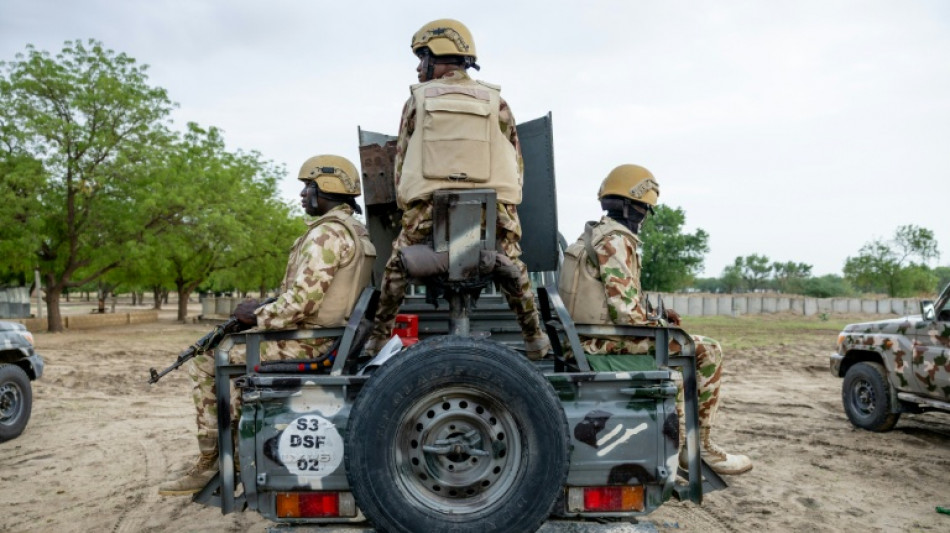
The Nigerian military said it targeted a "logistics hub" located "near the abandoned village of Jilli", on the Borno-Yobe state border, targeting militants from Islamic State West Africa Province (ISWAP).
But according to a conflict monitoring report prepared by the UN and seen by AFP, the strikes hit the Jilli market and "mistakenly killed at least 56 people," with local chief Lawan Zanna Nur saying that the dead and injured together numbered "around 200".
"I don't know if there were jihadists at the market. We are just ordinary people," Mala Garba, 42, told AFP from a hospital in Borno state capital Maiduguri while recovering from bullet wounds.
He was among the 46 victims from the town an AFP reporter saw at the hospital, some heavily bandaged, others with IV drips attached.
The governor of Borno state, the epicentre of Nigeria's 17-year-long jihadist insurgency, said the government shut the market down five years ago.
But Yusuf Bagana, a tailor who survived the strike, said it was operating normally.
He told AFP he "didn't know" about any closure orders and "was just focusing on my daily activities" before the bombing knocked him unconscious.
The "airstrike hit the entire Jilli town," said Garba. "All of us were living in the town. There was no warning."
- Living under, among jihadists -
During the peak of Nigeria's insurgency, about a decade ago when ISWAP forerunner-turned-rival Boko Haram controlled swathes of territory, "some elders knew there were Boko Haram and informants around," Garba said.
More recently, he said, in 2023 the army conducted house-to-house searches in the village and arrested two people. But there had not been any major security incidents since then, he added.
A security source told AFP that jihadists "control" and collect taxes from the market.
Pictures released by the military showed trucks and motorcycles allegedly belonging to jihadists amid what appeared to be a crowded market -- with one of the photos even labelled "market". Photos then show the site destroyed by strikes.
The Nigerian air force said it is investigating reports of civilian casualties.
When civilians are killed by the military, they are often accused of "harbouring" jihadists, said Isa Sanusi, country director at Amnesty International Nigeria -- an accusation that is often impossible to distinguish from simply living under jihadist control, as many Nigerians do across swathes of the northeastern countryside held by the militants.
Lieutenant Colonel Sani Uba, spokesman for operations in the northeast, said that the strikes followed "sustained intelligence" and "a rigorous and professional targeting process".
The military also said the strike hit targets that were affiliated with the killing of a Nigerian brigadier general last week, the second killing of a high-ranking officer in five months.
But Sanusi, who spoke to local residents and shared the video of the scorched market with AFP, said that militants simply being present did not justify the high civilian death toll.
"If the market is entirely run by insurgents, that is a different story," he told AFP. "But if the allegation is that insurgents used the market, that makes their claim very baseless."
- US says not involved -
The United States, which has sent troops to the country to train the Nigerian military, including in target selection, was "not involved in the planning, intelligence sharing, or execution of this operation," a US Africa Command spokesperson told AFP.
Over the years, Nigerian airstrikes have repeatedly killed civilians, with Human Rights Watch warning after a deadly strike in January that "such deaths have become a recurring feature".
Issa Mammane, another man recovering in Maiduguri hospital, told AFP that "five members of my family were killed" in the strikes.
Across Borno state, the violence has continued.
On Sunday, about 150 kilometres away from Jilli, ISWAP militants struck the garrison town of Monguno, near Lake Chad.
Ten soldiers, including a colonel, were killed, two anti-jihadist militia sources told AFP.
V.Colombo--GdR