Lebanese relive 'nightmare' of displacement from war / Photo: IBRAHIM AMRO - AFP
In the lobby of a vocational school packed with hundreds of people, Zeinab Moqdad, who fled Beirut's southern suburbs, rages at a new war between Hezbollah and Israel whose consequences she is once again forced to bear.
"It's a nightmare. To be safe at home and then suddenly have to flee... only those who've lived it can know what it's like," she said.
"It’s a war that’s been forced on us… We can’t do anything."
Hezbollah and Lebanese officials were not spared her criticism. "They should have secured their people before the war started… not left people like this to fend for themselves," she said.
Lebanon has been swept up in the Middle East's expanding war, after the Iran-backed armed Lebanese group Hezbollah on Monday fired missiles at Israel to avenge the death of Iranian leader Ali Khamenei.
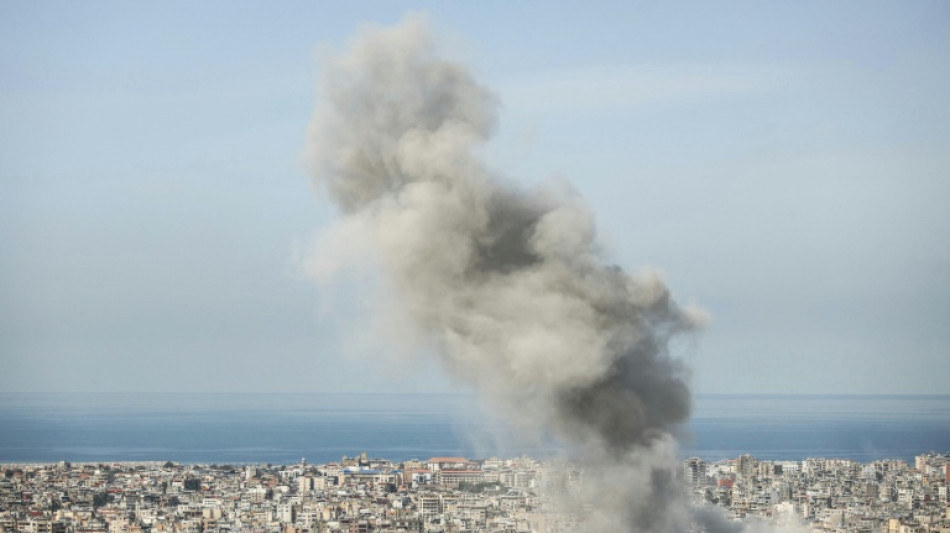
Israel responded immediately with waves of airstrikes, and Thursday night it escalated its response by hitting Beirut's southern suburbs where Hezbollah is active -- after warning the area's hundreds of thousands of residents to flee.
"Our country has been drawn into a devastating war that we did not seek and did not choose," Lebanon's Prime Minister Nawaf Salam told diplomats on Friday.
The displaced "are victims of the Israeli war on Lebanon but also of those who offered a pretext for the Israeli aggression", he added, in a jab at Hezbollah.
- Some 95,000 in shelters -
Sitting on a thin mattress with her daughter leaning on her shoulder in the school-turned-shelter in Dekwaneh, a neighbourhood north of Beirut, Moqdad, 50, said tiredly: "We just want to live, but Israel is treacherous and gives us no security."
In large, almost empty rooms, people sat on the floor -- some of the 95,000 people authorities say have been displaced to official shelters.
Some lay on blankets or cloth, while others had nothing but the cold ground. Children clung to their mothers inside halls lacking the most basic necessities.
For many, the forced displacement was an unwelcome repeat of the last Israel-Hezbollah war, which ended in 2024.
They have found no assistance from the state or from Hezbollah, which in previous wars provided financial aid and housing but emerged weakened in the last conflict.
Shortly after Hezbollah fired at Israel, many Lebanese took to social media to express dismay at the group's action.
- 'Story keeps repeating' -
Hiyam, 53, who declined to give her last name, fled Beirut’s southern suburbs on the first night of the Israeli retaliation.
She vented frustration as she languished in a room in the vocational school with no privacy.
"None of this makes any sense... From the start until now, what was the point of this war?" she asked.
"We are abandoned... The same story keeps repeating."
In the school, as women prepared a meagre Iftar meal that is eaten at sunset during Ramadan, Lubna Saad, 42, tearfully recounted how she fled at night her town of Bint Jbeil near the border, spending the entire night on the road.
"I never thought this would happen again," she said.
"I always prayed to God that what we lived through would not be repeated, but unfortunately it has come back again."
In the school's garden, where she sat with her family who fled southern Lebanon, a shocked Nihad Arkan, 33, who teaches Arabic, said: "What is happening is a nightmare, and I wish I could wake up from it. The suffering is enormous."
"In my opinion there was no need at all for this war to return, and it came at a terrible time."
Mohammad Ali Taqi, 50, a construction worker displaced from the border town of Markaba, said he was not surprised by the week's escalation.
"We were expecting the war to happen because we are always living under this threat," he said.
"All we want is for the situation to improve so we can go back to our homes and live in peace, but the enemy has no mercy."
L.Cattaneo--GdR