US Senate eyes funding deal vote as government shutdown looms
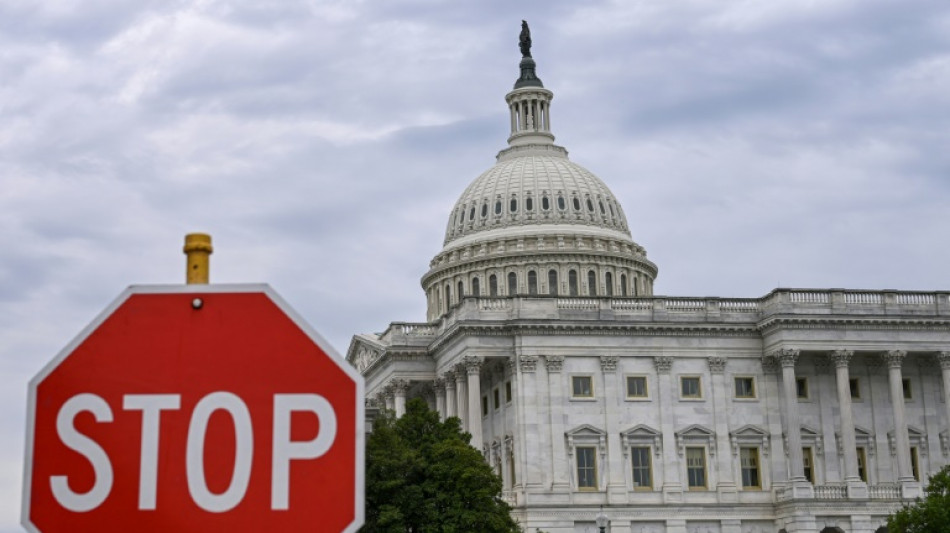
/ Photo: Alex WROBLEWSKI - AFP/File
The US Senate edged closer to a vote Friday on a funding deal to avert a government shutdown following a bitter standoff over President Donald Trump's sweeping immigration crackdown.
A partial government shutdown -- affecting roughly three-quarters of the federal government -- would be the second since Trump returned to office, threatening to furlough hundreds of thousands of public employees, interrupting government services and injecting fresh economic uncertainty just months ahead of the midterm elections.
Current government funding lapses at midnight Friday.
Democrats have said they are prepared to pass five of the six spending bills immediately, but have drawn a red line around funding for the Department of Homeland Security (DHS), demanding it be stripped out and renegotiated to impose new constraints on immigration enforcement agencies.
Senate Democratic Leader Chuck Schumer said Thursday that the White House had agreed to the demand, with Senate leaders from both parties hoping to bring the deal to the floor for a vote on Friday.
Democratic backlash to Trump's hardline immigration crackdown, sharpened by the killing of two protesters in Minneapolis by federal agents in recent weeks, had raised the prospects of a shutdown in recent days.
Democrats are pushing to rein in Immigration and Customs Enforcement (ICE), an agency that has rapidly expanded its ranks under Trump and now commands more funding than all other US federal law enforcement agencies combined.
That anger boiled over Thursday when Senate Democrats blocked a key procedural vote on a six-bill spending package designed to keep most of the government funded.
"What ICE is doing...it is state-sanctioned thuggery and it must stop. And Congress has the authority -- and the moral obligation -- to act," Schumer said in a speech on the chamber floor.
- All eyes on the House -
Any fix, however, would still have to be approved by the House of Representatives -- which is not due back from recess until Monday -- making at least a weekend gap in funding inevitable.
Lawmakers in both parties privately acknowledged that a brief lapse could easily stretch on if Schumer's agreement with the White House -- enthusiastically endorsed by Trump on Thursday -- hits roadblocks in the lower chamber.
Shutdowns temporarily freeze funding for non-essential federal operations, forcing agencies to halt services and place workers on unpaid leave or require them to work without pay.
Under the current plan, departments ranging from education and transportation to housing, health and defense could be affected, while pressure would mount quickly to resolve disruptions rippling through the economy.
Ironically, ICE itself would be largely unaffected, since it was allocated some $75 billion over four years in Trump's 2025 One Big Beautiful Bill Act.
The confrontation was triggered by events in Minnesota, where Alex Pretti, an intensive-care nurse filming Trump's deportation efforts, was shot dead by Border Patrol agents last weekend.
His killing came just weeks after another activist, Renee Good, was fatally shot blocks away during a separate immigration operation.
Those deaths detonated what had appeared to be a stable bipartisan funding arrangement and refocused congressional debate on the conduct of federal officers operating under Trump's aggressive enforcement campaign.
Democrats want to see an end to roving immigration patrols, tighter warrant requirements, a universal use-of-force code, a ban on officers wearing masks, and mandates for body cameras and visible identification.
Their agreement with the White House does not address any of these demands but it gives Congress an extra two weeks to thrash out a deal.
L.Moretti--GdR