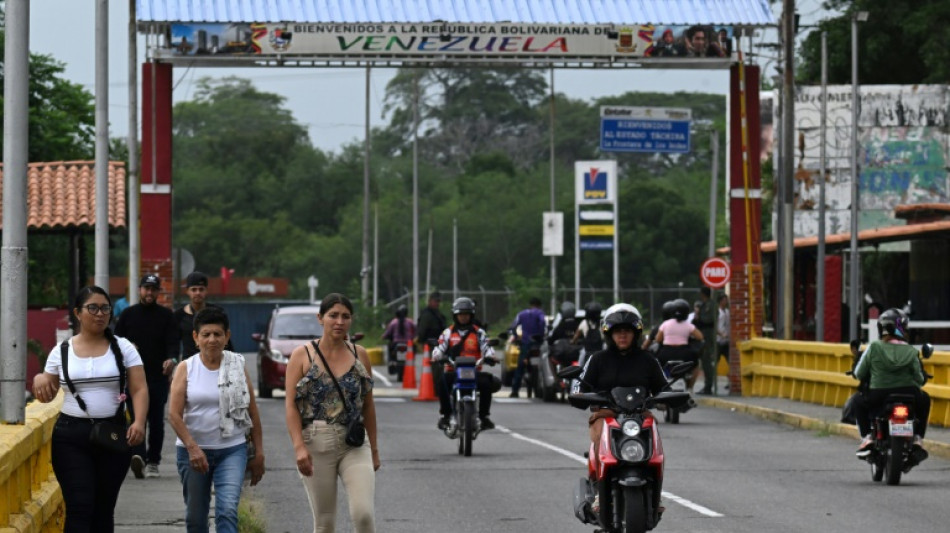
Relief mixed with fear as Venezuelans cross into Colombia / Photo: Raul ARBOLEDA - AFP
At a bridge leading to neighboring Colombia, Venezuelans who live and work abroad exit their home country in a steady trickle, full of anxiety for those they left behind after a festive season visit was blighted by a US military strike.
While many celebrate the toppling of leftist leader Nicolas Maduro by US forces, they are also anxious about what comes next, with US President Donald Trump claiming to be in charge of the country which on Monday swore in a Maduro acolyte as interim leader.
Evelyn Cardenas, a 57-year-old Venezuelan architect who has lived in Chile for nine years, was among dozens gathered to cross on foot at the Simon Bolivar International Bridge, dragging a large suitcase on wheels and followed by her husband.
As soon as she crossed over into Colombia, she let out a sigh of relief.
"All Venezuelans are happy, but we can't express it openly," she told AFP.
"I can say it now because I crossed the bridge."
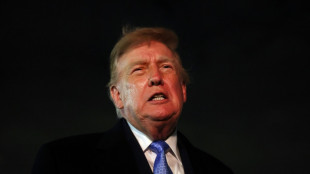
Trump has promised the same fate as Maduro's, or worse, for acting president Delcy Rodriguez if she does not follow Washington's bidding.
For many, the threat of further American intervention mixes with fear that the remaining "Chavista" administration will inflict retribution on anyone seen to be supporting Maduro's ouster.
Cardenas, who is from the Venezuelan city of San Cristobal, had returned home to celebrate Christmas and the New Year with her family.
She was still there when Caracas woke up to a rash of early-morning explosions Saturday that killed 55 Venezuelan and Cuban soldiers, according to those countries' governments.
"We still can't quite believe it," said Cardenas, who plans to travel by bus and plane back to Santiago.
She was hopeful of "something positive" in the long term, and that Venezuela will finally "emerge from the darkness" of economic collapse and political repression.
In the meantime, she'd rather be somewhere else.
- 'In shock' -
Walter Monsalve, a 55-year-old teacher who works on both sides of the border that Colombia reinforced with soldiers and armored vehicles, said he was "in shock."
"It should never have happened like this, whatever the reason," he said, likening the US attack to "someone barging into your house."
Like him, many neighbors and family members were fearful of what will come next, said Monsalve.
"I don't know what the UN is there for -- there are these international bodies that don't stop these situations," he lamented.
Several Venezuelans, many of whom frequently cross into the town of Cucuta to shop at lower prices on the Colombian side of the border, declined to express an opinion out of fear.
One said only: "Things are weird over there" on the Venezuelan side.
Kayleig Jimenez, a 16-year-old student, said she hoped for the return of relatives and friends once things settle down.
"We are now Veneyork," she laughed, in reference to Trump's comments that the United States "is going to run" her country.
Some eight million Venezuelans are estimated to have fled the South American nation in recent years, the majority of whom live in Colombia.
The bridge crossing also bustled with journalists who had come from all over the world to cover the biggest international news event so far this year.
After several days of waiting among a tangle of microphones, cables and cameras on tripods, many were starting to lose hope of being granted access to Venezuela, which is demanding visas even for Venezuelan-born journalists.
The Venezuelan press union said Tuesday that 16 media workers had been arrested the previous day during the first session of the country's newly-elected parliament, which swore in Rodriguez.
All were later freed.
A.Vecchi--GdR