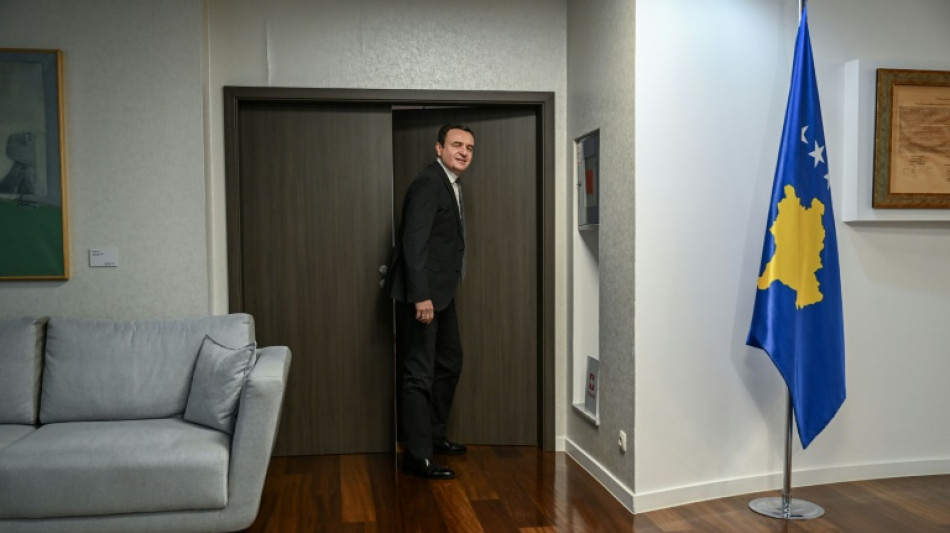
Kosovo, Serbia 'need to normalise' relations: Kosovo PM to AFP / Photo: Armend NIMANI - AFP
Kosovo and Serbia need to "normalise" their relations, Kosovo's Prime Minister Albin Kurti told AFP Wednesday, several days before legislative elections where he is seeking to extend his term with more solid backing.
Kurti has been in office since 2021 and previous accords signed with Serbia -- which does not recognise the independence of its former province -- have yet to be respected.
"We need to normalise relations with Serbia," said Kurti. "But normalising relations with a neighbouring authoritarian regime that doesn't recognise you, that also doesn't admit to the crimes committed during the war, is quite difficult," he added.
Tensions between the two neighbours are regularly high, and renewed unrest would provide Russia with means of destabilising his country.
"We do have a normalisation agreement," Kurti said, referring to the agreement signed under the auspices of the European Union in 2023.
"We must implement it, which implies mutual recognition between the countries, at least de facto recognition."
But to resume dialogue, Serbia "must hand over Milan Radoicic," a Serb accused of plotting an attack in northern Kosovo in 2023, Kurti asserted, hoping that "the EU, France, and Germany will put pressure" on Belgrade to do so.
- Russian shadow, US relations -
Russia's shadow also looms over relations with Serbia, which has never severed ties with Moscow and on which it depends for its energy needs.
"There are many links" between the two countries, said Kurti, and if Russia were to decide to destabilise the region, "in its march toward Western Europe, it can count on Serbia as an ally. And that is worrying for our country. But we are working with our partners to prevent that from happening."
Kosovo, which hopes to join NATO, has also been cultivating relations with Washington in recent months, by removing tariffs on American products and agreeing to accept up to 50 migrants from third countries extradited by the United States. So far, only one has arrived.
"We are not asking for any financial assistance in return," Kurti emphasised. "We are doing this to help the United States, which is a partner, an ally, a friend," added the prime minister, who did not rule out making similar agreements with European countries.
Unable to secure enough seats in the February 2025 parliamentary elections, Albin Kurti was forced to call early elections on Sunday, after 10 months of political deadlock during which the divided parliament failed to form a coalition.
"We need a decisive victory. In February, we won 42.3 percent, and this time we want to exceed 50 percent," he said.
G.Pozzi--GdR