Small firms join charge to boost Europe's weapon supplies / Photo: JOHN THYS - AFP/File
European nations have committed themselves to huge hikes in spending on weapons, with giant defence firms reaping the early rewards -- but the signs are that smaller companies and investors are now beginning to mobilise.
European countries spent 343 billion euros ($403 billion) on defence last year, a tenth consecutive annual increase, which is set to rise to 381 billion euros this year, according to the European Defence Agency.
Added to the general trend, NATO members have all agreed to increase spending to reach five percent of their economic output by 2035.
Giant firms from France's Dassault and Italy's Leonardo to Germany's Rheinmetall have already announced a slew of orders to deal with the rising demand.
With their order books filling up, ripple effects are spreading down the supply chain.
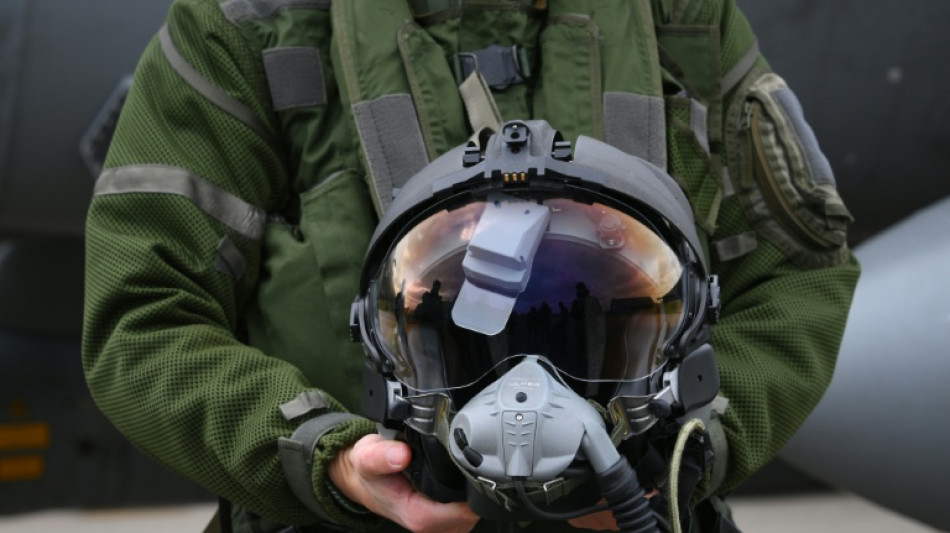
Factem, which makes sound equipment used by jet pilots as well as gear for civilian uses, is one of roughly 4,500 small and medium-sized defence companies in France.
The company, based in Bayeux in the north of the country, has 80 employees and generates 17 million euros in sales each year.
"Several years ago the defence industry wasn't in fashion," chief executive Alain Dulac told AFP. "Today, banks and the financial sector are more or less willing to support us."
But the change is gradual, he said, and not all defence firms are benefitting yet.
Nevertheless, the movement across Europe is clear.
Italian Defence Minister Guido Crosetto recently told Sole 24 Ore newspaper that raising defence spending was "a pre-requisite for peace in Italy".
Britain, meanwhile, is aiming to hike its spending from 60.2 billion pounds ($80.5 billion) last year to 73.5 billion pounds by 2028.
- Rare visibility -
Earlier this year, NATO nations pledged to gradually increase defence spending to reach five percent of gross domestic product by 2035, with 3.5 percent going on core defence spending and another 1.5 percent on infrastructure.
If European members meet the 3.5 percent target, their defence spending would double to around 770 billion euros, according a report by the EY-Parthenon consulting firm and DekaBank.
However small and medium-sized companies often lack the capital to invest in expansion of facilities and the development of new products.
The head of a German firm that supplies Rheinmetall, who spoke to AFP anonymously, said the question of financing was essential.
Growth has been so strong that profits are likely to double this year and he would like to build another production facility.
"But in Germany the banks traditionally don't like to lend to this sector," he said.
Instead, he has begun to test the waters with investment funds dedicated to the defence industry.
The French public sector investment bank BpiFrance recently created a fund for individual investors that aims to raise 450 million euros.
Adeline Lemaire, who leads the new fund, said she could see not only "a shift in public opinion" but also in the way major institutional investors make decisions about the sector.
Investors are beginning to view "security and sovereignty as prerequisites for being able to continue thinking about healthy economic development", she said.
Funds are springing up in other countries too.
According to Heligan Investments, a British fund that focuses on national security and law enforcement sector, private funds ploughed a record $5.2 billion into the defence and security sectors last year, a five-fold increase over six years.
French investment manager Sienna IM aims to raise one billion euros for a dedicated fund that will invest primarily in French small and medium-sized companies in the defence sector.
"Overall, some 12,000 companies work in the sector in Europe," said Laurent Dubois, Sienna IM's managing director for private credit.
These companies will need financing to purchase new equipment to expand and to hire and train additional staff, he noted.
"It's a real opportunity: it's rare that we have such visibility over three, four years," said Dubois.
F.Gentile--GdR