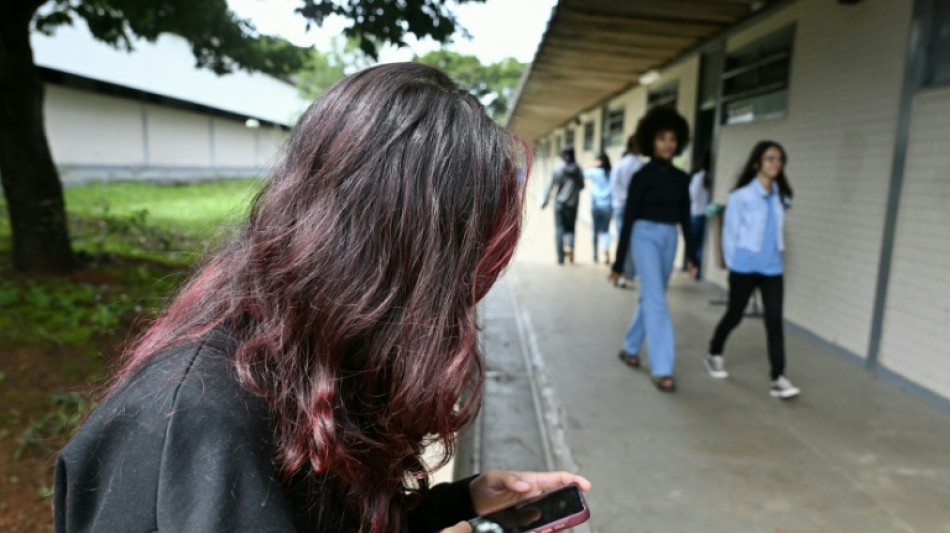
Brazil starts to restrict minors' access to social media / Photo: Evaristo Sa - AFP
Brazil began implementing new measures on Tuesday to restrict minors' access to social media and prevent them from viewing violent or illegal content.
A law regulating children's use of social media was approved last year after a scandal involving the alleged sexual exploitation of minors on Instagram, and comes into effect this week.
The hyper-connected nation of 212 million people joins several other countries seeking to protect children from addictive social media algorithms.
Some, like Australia, have outright banned access, while others require stronger age verification measures or parental consent.
In Brazil, adolescents up to 16 years of age must now have their accounts linked to that of a legal guardian.
Digital platforms are required to demand "reliable" age verification to prevent minors under the age of 18 from accessing prohibited or inappropriate content, such as pornographic or violent material.
"What our legislation did was ban self-declaration" as an age verification mechanism, as "that method is ineffective," said Iage Miola, Director of the National Data Protection Authority (ANPD), the government body tasked with implementing the law.
Details on how the mechanism will work have not yet been released.
From Tuesday, a "transition period" will start, during which the ANPD will outline the technical aspects of the law.
Miola said he had met with representatives from technology companies to review their proposals.
He said the preferred verification method was, for the time being, users uploading an identity document and providing biometric photo verification.
The law also requires digital platforms to remove content that appears to depict sexual exploitation or abuse, and notify Brazilian authorities.
Companies that fail to comply with the new regulations face punishment ranging from fines of up to 50 million reais (approximately 9 million dollars) and account suspensions, to an outright "ban" in cases of repeated non-compliance.
The law bans advertising aimed at children and adolescents, as well as so-called "loot boxes" --items within video games which users pay for to receive a surprise reward.
"Unlike other countries, Brazil opted for a law that is not limited to regulating social media for children, but rather covers the entire internet," Renata Tomaz, a professor at the Getulio Vargas Foundation, told AFP.
M.Russo--GdR