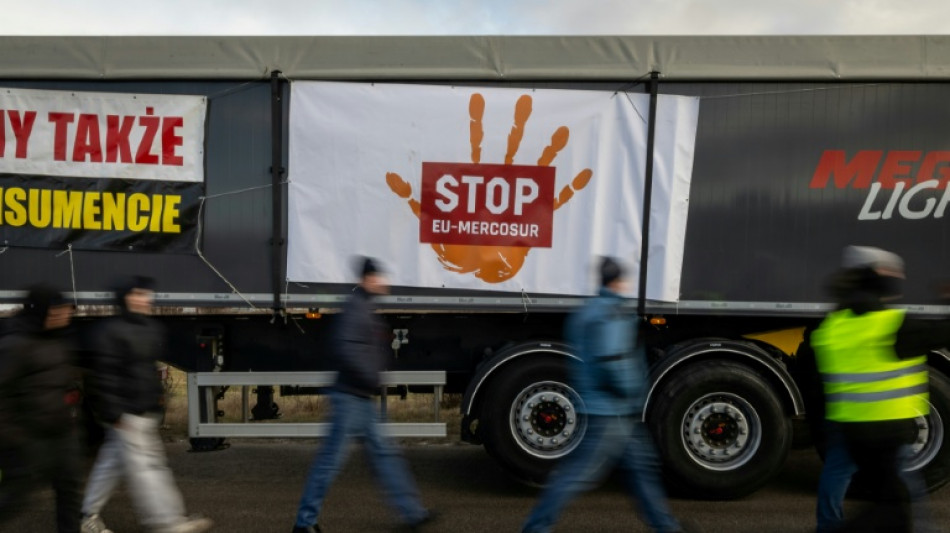
EU hopes to sign Mercosur trade deal soon / Photo: Wojtek RADWANSKI - AFP
The European Union on Monday said it hoped to sign a long-delayed trade deal with South American bloc Mercosur "soon", pointing to progress towards approval by the bloc's member states.
Diplomats have said the EU aims for a signature on January 12 after hopes to ink the agreement in December were dashed by France and Italy joining forces to demand a delay.
European Commission chief spokeswoman Paula Pinho did not confirm the new January date but insisted the EU was on the "right track" for approval.
"There have been discussions, work, and progress over the past two weeks," she told a press conference in Brussels.
In a push to get the deal over the line, EU agriculture ministers will discuss the agreement on Wednesday during an extraordinary meeting in Brussels.
European diplomats said that could be a prelude to a vote on Friday by member states, paving the way for an official signing.
More than 25 years in the making, the accord would create the world's biggest free-trade area, boosting trade between the 27-nation EU and the bloc comprising Brazil, Paraguay, Argentina and Uruguay.
But plans to seal the deal at a Mercosur gathering in Brazil on December 20 ran into a late roadblock as heavyweights Italy and France demanded a postponement over concerns for the farming sector.
- France suspending imports -
Germany and Spain are strongly in favour of the agreement, believing it will provide a welcome boost to their industries, hampered by Chinese competition and tariffs in the United States.
The deal would help the EU export more vehicles, machinery, wines and spirits to Latin America at a time of global trade tensions.
In return, it would facilitate the entry into Europe of South American meat, sugar, rice, honey and soybeans.
This has alarmed many European farmers who fear they will be undercut by a flow of cheaper goods from agricultural giant Brazil and its neighbours.
Rome and Paris have called for tougher safeguard clauses, tighter import controls and more stringent standards on Mercosur producers to protect their farmers.
The French government also Sunday announced plans to suspend imports of foodstuffs containing substances banned in Europe.
This would include avocados, mangoes, guavas, citrus fruits, grapes, apples, melons, cherries, strawberries, and potatoes "from South America or elsewhere" according to French Prime Minister Sebastien Lecornu.
The plans will, however, need approval from Brussels.
The EU executive is "already working on establishing that the most hazardous pesticides, which are banned in the EU for health for environmental reasons, are not allowed back to the EU through imported products", commission spokeswoman Eva Hrncirova said on Monday.
E.Barbieri--GdR