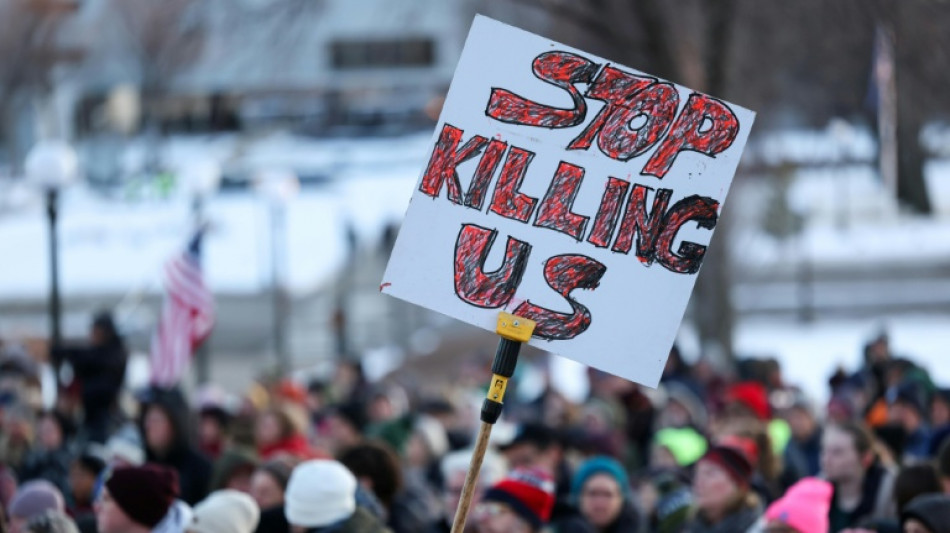
Neighbors in Minneapolis protect each other from US immigration police / Photo: CHARLY TRIBALLEAU - AFP
When Jennifer Arnold learned one of her neighbors in the midwestern city of Minneapolis had been arrested by immigration authorities late last year, she reached out to lend a hand.
"She answered the phone sobbing because she had gone to a work site with her husband, and he had been pulled out of their car and picked up," Arnold recalled.
Now, a month later, Arnold is connecting neighbors to help immigrants survive the sweeping crackdown by the administration of US President Donald Trump, which turned deadly this week when a federal agent opened fire on a woman driving an SUV.
Arnold said at first she helped her neighbors, who were terrified of leaving their homes "because it's not safe."
Then she noticed that the school bus stop nearby, which usually had 20 children waiting for a ride to school in the morning, only had 10 kids.
"Many of those families didn't feel safe sending their kids because they had to walk" a couple blocks to get to the stop, Arnold said.
She took action, asking neighbors "if I could get someone to walk with your kid to the bus stop, or take them, drive them to school, would you send them?"
Neighbors said yes.
With that, Arnold began helping a dozen children get to school beginning the second week of December.
"And then the next week, it was 18 kids. And now I have 30 on my list," Arnold said.
- Adopting a family -
Parents, neighbors and friends of friends signed up to take children to and from school -- walking them to a bus stop or driving them -- to help them avoid falling behind in class.
And when Christmas came and schools closed for the holiday, Arnold asked volunteers to adopt a family for the holiday and organized food deliveries.
"They went shopping and brought bags of groceries to the family they adopted. We did one right before Christmas and one right before New Year's. And folks said to me 'my kids would have been hungry' if we hadn't done that," Arnold said.
Wednesday's shooting death of 37-year-old Renee Nicole Good at the hands of masked ICE agents -- who are still conducting operations on Minneapolis streets -- has only inspired more volunteers.
"I went to pick up a four-year-old and introduce him to a neighbor who's gonna walk him home every day. And there were all these people out on the streets who were like, 'Can we do this too?' And since what happened on Wednesday, my list is growing," Arnold said.
Now, schools are adapting to the families' fears: Minneapolis announced Friday that it is launching remote learning through mid-February for students who need it.
On the streets, neighbors have been vigilant in using whistles to alert each other about the presence of ICE agents.
Education union leader Natasha Dockter says she wears her whistle "all the time now," adding: "I use it more often that I would like to."
She said it also becomes "an invitation to talk to other neighbors about what's going on," and she keeps extra whistles in her pocket to share with those who are interested in helping.
While neighbors in Minneapolis are trying to alert each other to potential suffering, there are also those who are coping in silence.
"There are kids who have lost a family member, who are completely traumatized, who are terrified every day, who can't leave their houses other than to go to school," Becca Dryden, 36, told AFP, adding that the duty of parents to inform kids about what was happening was a tough one.
"As parents, we keep having to explain these tragedies to them. Whether they are targeted themselves or watching their neighborhood and community be targeted, this is a trauma that's happening to all of our children."
A.Fumagalli--GdR